M&A Legal & Compliance
The legal machinery of a transaction: purchase agreements, reps and warranties, indemnity and escrow, entity and licensing transfers, insurance, and the compliance items that stall closings.

Seller Equity Rollover: Independent Sponsor Terms
Guide for sellers reinvesting with independent sponsors: verify ownership, sponsor cash and fees, governance, exit rights, and funding commitments.
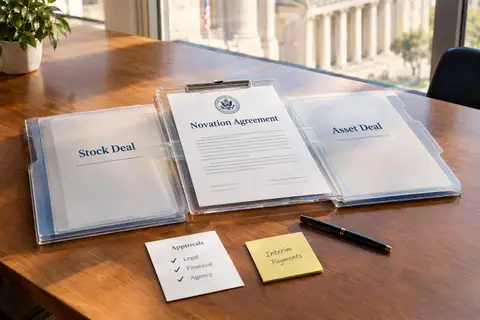
Stock vs. Asset Deals: Government Contract Novation
Compare stock vs. asset deals for federal contracts; learn when novation, approvals, and interim payment planning are needed.

Phase I vs. Phase II ESA Reports in Business Deals
Compare Phase I and Phase II ESAs: what each examines, when sampling is needed, and how findings affect financing, costs, and closing.

E-Verify and Form I-9 Rules in Business Acquisitions
A buyer must approve a written I-9 and E-Verify plan before closing to limit post-acquisition compliance exposure and liability.

FCC License Assignment vs. Transfer of Control
Decide whether a deal changes the license holder or who controls it—the key test that determines FCC filing, timing, and closing rules.

Incurable Breaches: Pre-Closing Termination Rights
Don’t terminate a deal over a pre-closing breach until you’ve confirmed cure options, tracked deadlines, and verified termination rights.

IP Licenses: Assignment vs. Change of Control in M&A
Match each material IP license to deal structure and law; obtain required assignment or change-of-control consents before closing.

Liquid Capital: Franchise Buyer Requirements Explained
Which assets franchisors and lenders accept as liquid capital, how to document them, and what deductions reduce usable funds.
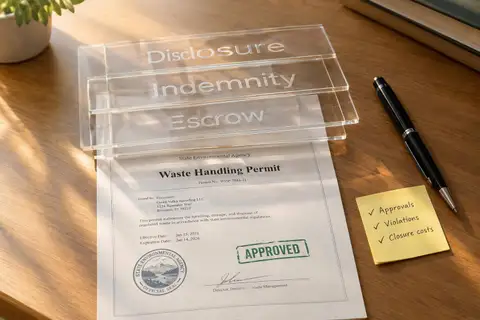
Waste Permit Transfers: Liability and Seller Terms
Verify approvals, unresolved violations, and closure costs; use disclosures, indemnities, and escrows—contracts allocate costs, regulators retain enforcement.
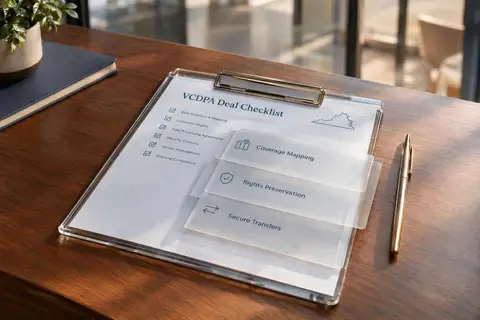
Virginia Consumer Data Protection Act: SMB Deal Guide
Acquiring customer data without VCDPA checks creates legal risk—use a checklist to map coverage, preserve rights, and secure transfers.

M&A Escrow Agreements: 7 Holdback Terms Sellers Review
Seven holdback terms sellers must review in M&A escrows: amounts, agent control, covered claims, notices, releases, disputes, and fees.
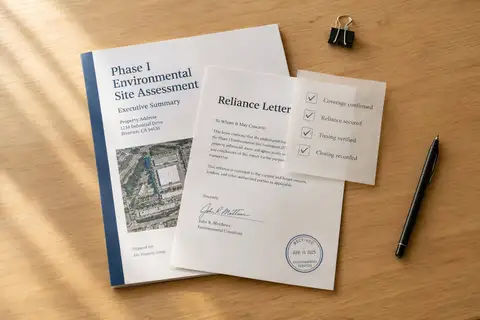
Seller Phase I Reports: Buyer Reliance Documentation
Checklist to confirm a seller Phase I ESA covers your deal, secure written reliance, verify timing/changes, and record closing actions.

Fraud Carve-Outs: Indemnification Cap Risks in SMB Deals
When fraud uncaps indemnity limits, buyers still must prove fraud, show damages, and secure collectible recovery.

Holdco vs Opco: Legal Structure for Acquisitions
Pick the corporate structure your deal needs—not the one that looks better on paper.

10 Red Flags in Buyer Qualification
10 buyer red flags: vague criteria, weak capital, no lender, unverified funds, poor follow-through; use staged gates to protect sellers.

Seller Representations in Business Sales: Guide
How seller representations, disclosure schedules, survival periods, caps, baskets, and escrow allocate risk in SMB business sales.

Serial Acquisitions Face Antitrust Scrutiny
Stacked small acquisitions can trigger antitrust review when they concentrate local markets. Map deals and document standalone rationales.

IP Rights in SMB Acquisitions: 7 Transfer Steps
Treat IP transfer as a closing-critical workstream in SMB deals—miss any step and you risk not owning the assets you paid for.

Transaction Cost Budget for SMB Acquisitions
Purchase price is only the start—budget transaction costs, SBA and lender fees, and 1–3 months of reserves to avoid running out of cash.

Customer Data Migration Checklist for Acquisitions
Checklist to map sources, verify legal rights, backup and test cutovers, and reconcile billing and support when migrating customer data in acquisitions.
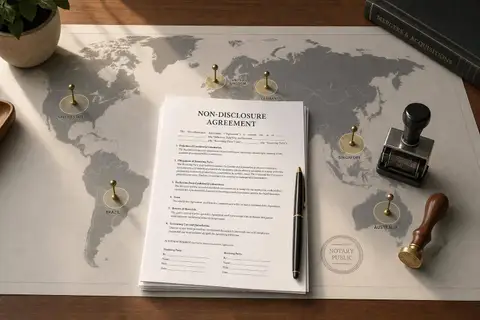
M&A NDA Enforceability by Jurisdiction: Key Differences
Same NDA, different enforcement—jurisdictions vary; precise drafting, narrow scope and strong records decide.

How To Evaluate VDR Security For M&A Deals
Judge VDR security by encryption, access control, logs, MFA, and stage-based rules to protect M&A deals.
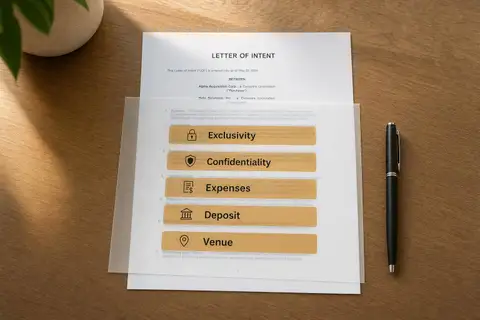
LOI Q&A: Binding Terms in Business Acquisitions
Treat LOIs as split documents: process clauses (exclusivity, confidentiality, expenses, deposits, venue) often bind immediately.
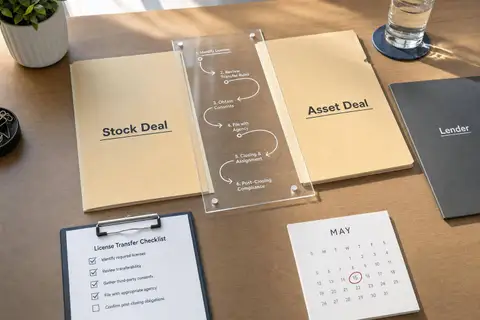
License Transfer Rules in SMB Acquisitions
How licenses move in stock vs asset SMB deals, agency timing, lender risk, and a buyer's checklist to avoid operational gaps.

Massachusetts Installment Sale Election Guide
MA installment-sale rules: $1,000,000 cutoff, when a state election and security are required, and how to coordinate federal and state filings.
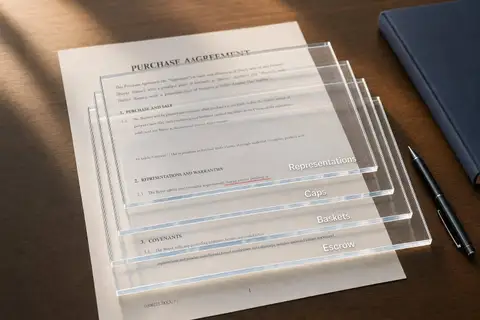
Representations and Warranties in SMB Acquisitions
If diligence finds a risk and the contract doesn't address it, the buyer usually keeps that risk—tighten reps, caps, baskets, and escrows.

How to Plan Customer Data Transfer in M&A
Plan customer data transfer from LOI to Day One: inventory risks, confirm legal transfer, migrate Day One data, and lock post-close access.

Cross-Border Regulatory Review for SMB Buyers
SMB buyer guide to map country-level risks and run regulatory diligence across corporate, tax, labor, payments and data, tying red flags to price, escrow, or closing conditions.
Asset Deal vs Stock Deal: Buyer Checklist
Compare asset vs stock acquisitions: liability, tax, consents, employee transfer, and a pre-LOI-to-closing checklist for buyers.

Horizontal vs Vertical Mergers: SMB Antitrust Basics
Same-market overlap signals horizontal antitrust risk; supply-chain control signals vertical risk. What SMB buyers should screen for before LOI.

E-2 Visa Rules for U.S. Business Buyers
Guide to qualifying for an E-2 visa when buying a U.S. small business: treaty nationality, 50% ownership, source-of-funds, control, and timing.

HIPAA Compliance in Healthcare M&A Deals
Manage HIPAA risk in healthcare M&A: limit PHI, verify BAAs and security, map data flows, and require Day-1 controls.
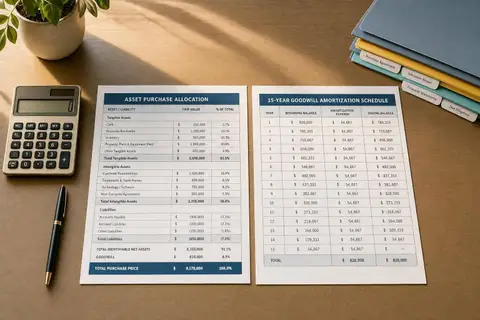
Goodwill Allocation: Section 197 Tax Guide
How Sections 197 and 1060 determine goodwill allocation, Form 8594 reporting, and the 15-year amortization schedule in asset, stock, and deemed asset sales.

Tax Treatment of Earnouts in SMB Deals
Whether an earnout is purchase price or compensation drives capital gain vs ordinary income, payroll tax, imputed interest, and reporting for SMB buyers and sellers.

Form D Filing Deadlines for Search Funds
When a search fund must file Form D: 15 calendar days from the first binding investor commitment and how to avoid late filings.

What Purchase Price Allocation Means for Seller Tax in a Business Sale
In an asset sale, splitting the price across goodwill, inventory, equipment, and non-competes can swing a seller's tax bill by six figures. Here's how to model it.

CPA Firm M&A: License Transfer Checklist
A clear checklist for CPA firm deals: state permits, ownership rules, EINs, payroll, peer review, and post-close filings—mapped to deal type and deadlines.

Fraud Risks in SMB Acquisitions: Solutions by Industry
Prevent overpaying in SMB deals by verifying earnings, revenue, and liabilities with industry-specific diligence steps.

Indemnification Caps and Baskets: What Buyers Need to Know
How caps, baskets, and carve-outs decide buyer recovery in M&A—cap and basket sizes, deductible vs. tipping baskets, survival periods, and negotiation tips.
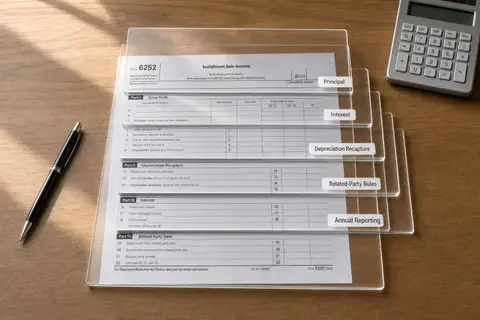
Form 6252: Reporting Installment Sale Income
Clear, practical guide to Form 6252: when to file, splitting principal vs interest, depreciation recapture, related-party rules, and annual reporting.
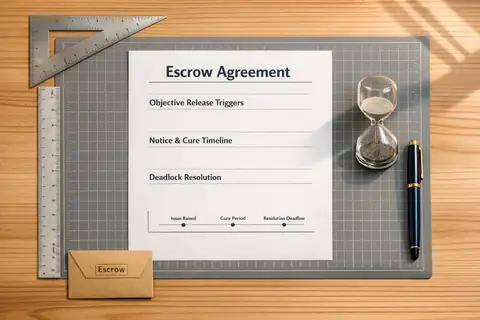
Escrow Dispute Resolution: Key Contract Clauses
Well-drafted escrow clauses prevent costly post-close disputes. Learn objective release triggers, notice and cure timelines, deadlock handling, and resolution methods.

Survival Periods in Private Acquisitions: Buyer vs. Seller Negotiation Guide
Survival periods set the deadline for post-closing rep & warranty claims. Here's how buyers and sellers should align them with escrow, RWI, and notice rules.

Top 5 Compliance Risks in Energy Acquisitions
Five key compliance risks in energy M&A: environmental permits, NERC cybersecurity, license transfers, antitrust, and vendor due diligence.

Tax Indemnity vs. Escrow: Protecting Against Liabilities
When buying a business, tax liabilities can become unexpected financial burdens. Learn the key differences between tax indemnity clauses and escrow accounts, and how to use both tools to protect against post-closing liabilities in M&A transactions.

Personal Guarantee Insurance for SBA Loans: The Ultimate Guide for Business Buyers and Investors
Learn how Personal Guarantee Insurance (PGI) protects your personal assets when taking SBA loans. Coverage details, costs, real-world examples, and strategies for business buyers and investors.
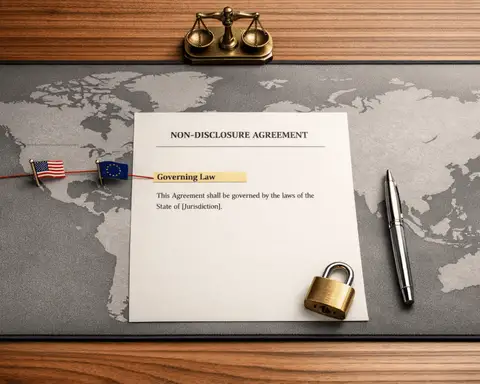
Governing Law Clauses: Impact on Cross-Border NDAs
Pick and draft governing law clauses for cross-border NDAs to reduce enforcement risk and comply with data protection rules.

How Third-Party NDAs Impact M&A Deals
When companies share sensitive information during mergers and acquisitions (M&A), protecting confidentiality is critical. Third-party Non-Disclosure Agreements (NDAs) ensure that not just buyers and sellers, but also their advisors - like attorneys, accountants, and consultants - handle this inf
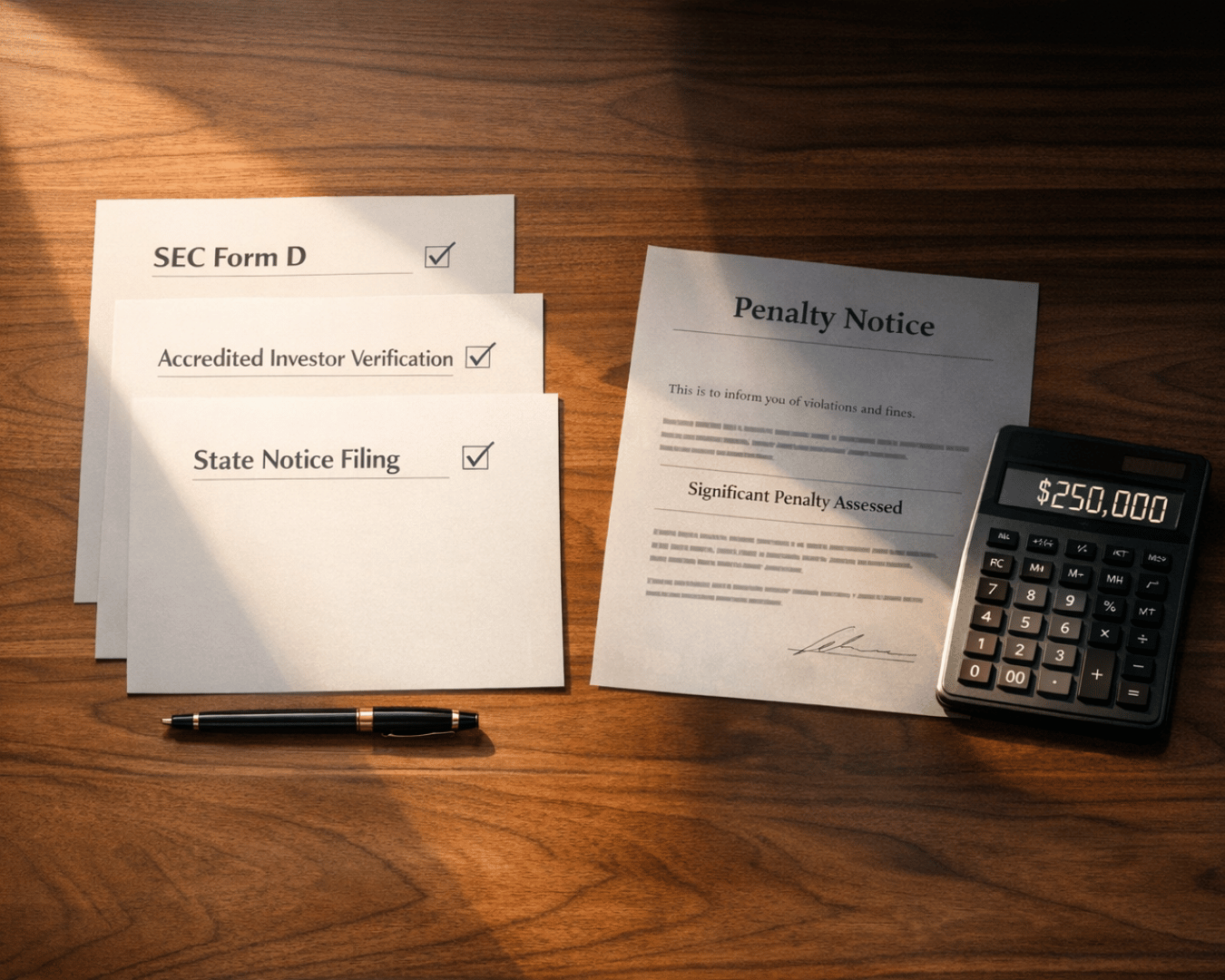
Regulation D Compliance: Penalties You Must Know
Not following Regulation D rules when raising money for your business can lead to serious problems. These include fines, losing investor trust, and even being barred from raising funds in the future. Regulation D simplifies fundraising by letting companies sell securities without full SEC registrati

NDA Breach Remedies in M&A Deals
When NDAs are breached during mergers and acquisitions (M&A), the consequences can be severe, threatening deals worth millions. Remedies focus on injunctive relief to stop further harm and monetary damages to compensate for losses. Unlike standard NDAs, M&A NDAs prioritize speed and enforcea
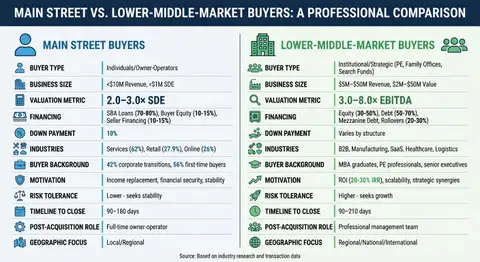
Main Street Buyers vs. Lower-Middle-Market Buyers
When selling a business, understanding the type of buyer is essential. Main Street buyers are typically individuals seeking hands-on ownership and income replacement, while Lower-Middle-Market (LMM) buyers are institutional investors focused on growth and returns. Here's what sets them apart:
Liabilities vs. Litigation Risks in M&A Deals
When buying or selling a business, understanding liabilities and litigation risks is essential. These two factors can significantly influence deal valuation, financing, and post-closing operations.
Checklist for Negotiating NDAs in M&A Transactions
Non-Disclosure Agreements (NDAs) are a critical first step in mergers and acquisitions (M&A). They protect sensitive business information like financials, trade secrets, and strategic plans during deal discussions. Without an NDA, confidential data could be misused, leading to competitive risks
How to Review Contracts After an Acquisition
When you acquire a business, you also inherit its contracts - everything from customer agreements to vendor deals, employment terms, and leases. These contracts come with obligations that can impact your revenue, costs, and operations if not handled correctly. Some contracts may have clauses trigger

Checklist for Cross-Border Entity Formation
Cross-border entity formation can help businesses expand into new markets, but it comes with complex challenges. Here's a quick overview of key steps and considerations:

Ownership Transfer Compliance: Key Legal Rules
Transferring business ownership requires following strict legal rules to avoid fines, delays, or invalid transactions. Whether you're passing ownership within your family, to employees, or to external buyers, compliance with corporate laws, tax regulations, and industry-specific rules is essential.

NDA Enforcement in Small Business Deals
NDAs (Non-Disclosure Agreements) are essential for protecting sensitive business information, whether you're a small business owner or part of a large corporation. But enforcing NDAs looks very different depending on the size of the deal.

Partnership Buyouts: Legal and Financial Steps
Partnership buyouts occur when one partner purchases another’s share of a business. This process involves legal agreements, financial planning, and often, business valuation. Reasons for buyouts range from partner conflicts to retirement or the need for liquidity.

Mergers vs. Acquisitions: Employment Law Differences
When companies undergo mergers or acquisitions, employment law plays a major role in shaping how employees are impacted. While both processes involve combining businesses, they differ significantly in legal structure and how they handle workforce transitions:

How to Customize NDA Templates for M&A Deals
When you're dealing with M&A transactions, NDAs are your first line of defense for protecting sensitive information. But a generic NDA template won't cut it. Here's why and how to customize an NDA for your deal:
Mutual vs. Unilateral NDAs in M&A Deals
Non-disclosure agreements (NDAs) are critical in mergers and acquisitions (M&A) to protect sensitive information like financial data, trade secrets, and operational details. There are two main types:

Checklist For Detecting Inventory Fraud In Acquisitions
Inventory fraud can derail your acquisition. It inflates a company's value or hides financial issues, leading to legal problems and operational chaos. Here's what you need to know to protect your investment:

Regulatory Compliance Checklist for SMB Acquisitions
Acquiring a small business comes with more than just taking over its operations - you also inherit its regulatory obligations. Missing compliance steps can lead to fines, legal issues, or even operational shutdowns. Here’s what you need to know:

Stock vs. Asset Sales, 338(h)(10), F Reorgs, and QSBS Explained
When buying or selling a business, how you structure the transaction — as a stock sale or asset sale — can dramatically affect taxes, liability, and long-term outcomes. And with smart tax planning tools like Section 338(h)(10) elections, F reorganizations, and QSBS exemptions, savvy buyers and selle

The New 23% QBI Deduction in the One Big Beautiful Bill: What Every Small Business Owner Needs to Know

5 NDA Use Cases in Business Sales
Non-Disclosure Agreements (NDAs) are critical in business sales to protect sensitive information and maintain confidentiality. Here’s how NDAs help:

How Licensing Impacts SMB Acquisitions
Licensing is critical in small business acquisitions. It affects how businesses operate, their value, and the acquisition process. Here's what you need to know:

HR Compliance Checklist for SMB Acquisitions
Acquiring a small or medium-sized business (SMB) can be complex, especially when it comes to HR compliance. Here's what you need to know to avoid costly mistakes and ensure a smooth transition:

How to Use NDAs to Protect Business Sale Information
By drafting clear NDAs, sharing information in phases, and using tools to manage agreements, you can secure confidentiality during business sales.