Phase I vs. Phase II ESA Reports in Business Deals
Compare Phase I and Phase II ESAs: what each examines, when sampling is needed, and how findings affect financing, costs, and closing.
 Samson JagorasPrincipal & CEO/CIOOctober 24, 2026
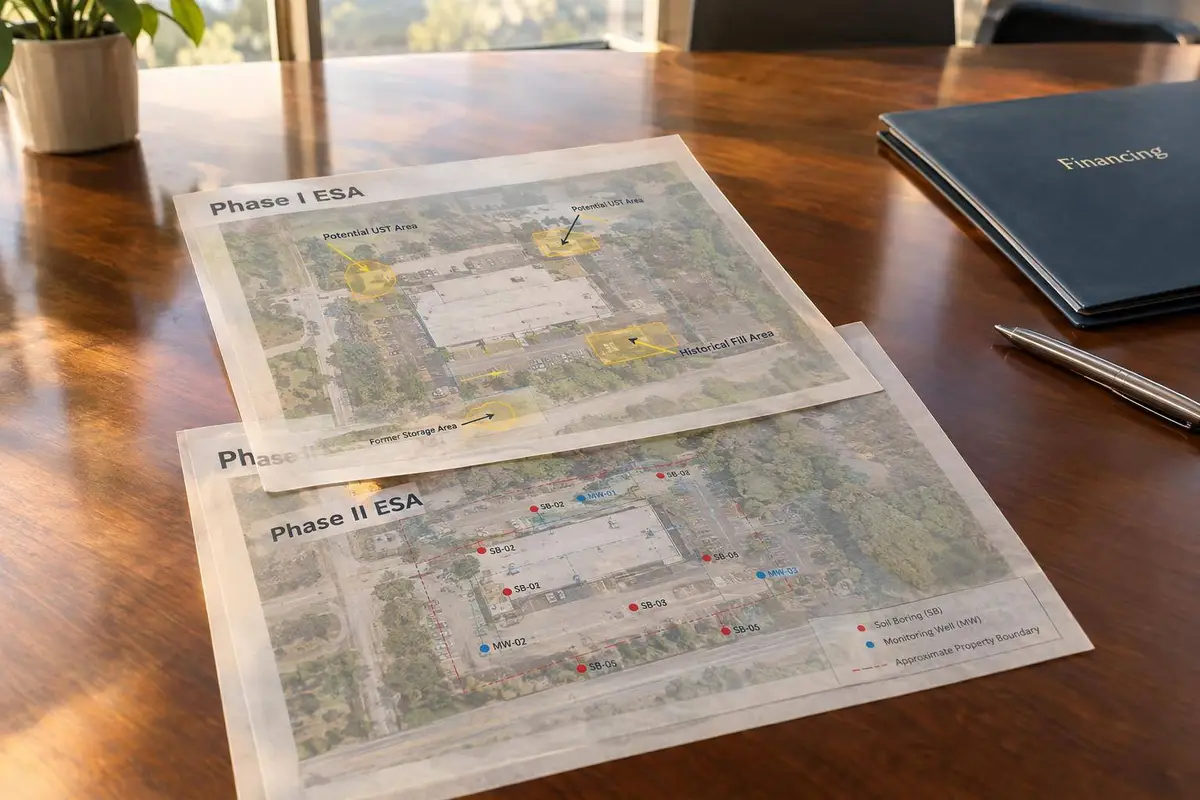
Phase I screens for possible contamination; Phase II uses samples and lab tests to check specific concerns. Before you approve testing, I’d confirm what question it must answer, who pays, and whether results will arrive before closing. A recommendation for Phase II is not proof of contamination.
I’d use both reports to guide the same decisions: lender approval, testing and cleanup budgets, contract protections, and whether to close, delay, or walk away. <u>Neither report removes liability by itself.</u>
Quick Comparison
| Criteria | Phase I ESA | Phase II ESA |
|---|---|---|
| Purpose | Review property history and flag possible releases | Test suspected contamination |
| Work | Records, interviews, and a site visit; generally no sampling | Targeted soil, water, or vapor sampling and lab analysis |
| Report | Findings, condition classifications, gaps, and conclusions | Test methods, results, limits, and next steps |
| ASTM standard | E1527-21 | E1903-19 |
| Common trigger | Purchase, refinancing, redevelopment, or lender review | An unresolved concern or lender requirement |
| Cost and timing | Depend on property complexity, records, and access | Depend on access, drilling, sample count, lab work, and added testing |
| Deal use | Decide whether more investigation or protections are needed | Assess cleanup exposure, financing terms, and closing conditions |
My takeaway: match the testing scope to the unresolved concern, keep investigation costs separate from cleanup costs, and coordinate with your consultant, lender, and counsel before waiving contingencies.

Phase I vs. Phase II ESA: From Findings to Closing
Phase I vs Phase II Environmental Assessment Explained | Commercial Real Estate Due Diligence

sbb-itb-a3ef7c1
Phase I vs. Phase II ESA: Scope and Reports
For buyers and lenders, the main difference is how each phase affects due diligence, pricing, and the risk of closing delays.
| Issue | Phase I ESA | Phase II ESA |
|---|---|---|
| Purpose | Screen for actual or likely releases and threats of future releases. | Test for suspected contamination and investigate where it extends. |
| Inputs / workplan | Historical maps, aerial photographs, directories, environmental databases, agency files, and interviews. | Phase I findings, suspected source areas, likely contaminants, and site geology/hydrogeology. |
| Site activities | Visual inspection; generally no intrusive work. | Targeted borings, monitoring wells, and sample collection, as needed. |
| Sampling | Usually not included. | Soil, groundwater, surface water, soil vapor, or other relevant media. |
| Report deliverables | Property history, observations, environmental-condition classifications, significant data gaps, and conclusions. | Sampling methods, laboratory results, quality-control findings, comparison criteria, limitations, and recommendations. |
| ASTM standards | ASTM E1527-21. | ASTM E1903-19 provides the investigation framework. |
| Typical trigger | Acquisition, refinancing, redevelopment, or lender due diligence. | An identified concern, suspicious property history, or lender requirement. |
| Deal decisions | Whether further investigation or contract protections are needed. | Whether findings affect collateral, cleanup exposure, pricing, or closing conditions. |
| Cost drivers | Property size, complexity of past uses, records access, and urgency. | Drilling access, sample count, laboratory panels, wells, and follow-up testing. |
| Schedule drivers | Research, interviews, site access, agency files, and report preparation. | Access approvals, fieldwork, laboratory turnaround, interpretation, and possible additional sampling. |
Neither phase is a fixed-price or fixed-schedule package. The scope depends on the property, the deal, lender requirements, and the environmental professional’s judgment.
Phase I: Records, Interviews, and Site Visits
A Phase I report connects past land uses with current site observations and regulatory records. The condition classifications matter:
- A recognized environmental condition (REC) generally means the presence, likely presence, or materially threatened future release of hazardous substances or petroleum products.
- A controlled REC (CREC) generally involves a past release that has been addressed but still requires activity or use limitations, institutional controls, engineering controls, monitoring, or other continuing obligations.
- A historical REC (HREC) generally describes a past release addressed to applicable standards, with no current controls or restrictions.
Read the underlying closure documents and restrictions - not just the classification.
A Phase I generally excludes sampling, so it cannot establish whether contamination is present or absent. A Phase I that complies with ASTM E1527-21 can satisfy All Appropriate Inquiries, but liability protections also depend on eligibility and continued compliance.
Phase II: Sampling and Lab Testing
Phase II testing focuses on the concern under investigation. Work may include borings and soil, groundwater, surface-water, or soil-vapor samples analyzed for petroleum compounds, solvents, metals, or other relevant contaminants.
The report should document sampling locations and depths, analytical methods, detection limits, quality-control results, and applicable comparison criteria. These details determine what the results can support.
Results apply only to the contaminants, locations, depths, and media tested. Exceeding a screening level does not automatically establish a regulatory violation. Nor is a Phase II automatically a cleanup plan; further investigation or regulatory review may be needed.
Subsurface testing also does not replace separately scoped asbestos or lead-based-paint surveys. Confirm those building-material requirements separately before renovation or lender approval.
When Phase I flags a REC, data gap, or suspected source area, Phase II testing may be the next step.
When Phase I Findings Call for Phase II Testing
A Phase I recommendation means a concern remains unresolved - not that sampling is automatically required. If the concern affects the deal, Phase II targets the unanswered question. Before authorizing sampling, ask the environmental professional whether more records, interviews, or agency files could resolve it. The issue must be specific enough to justify sampling.
Site Conditions and Records That Need Follow-Up
Staining, chemical odors, stressed vegetation, leaking containers, spill records, and unanswered tank-removal questions may justify sampling when records cannot settle concerns that affect buyer acceptance or lender approval. Past high-risk uses - manufacturing, dry cleaning, auto repair, agriculture, fuel storage, or waste disposal - call for closer review, but they don't automatically require Phase II testing. Tank-removal reports, earlier sampling results, and regulatory closure documents may resolve the concern if they cover the specific area and any remaining obligations.
Contamination can also migrate from nearby land through groundwater or vapors that enter occupied buildings. Missing spill files, inaccessible areas, and unknown chemical-storage locations matter when they prevent a reliable assessment of those risks. Check early whether the lender, buyer, or regulator requires more diligence than the consultant’s scope covers.
Once you've defined the concern, finalize the sampling plan before crews mobilize.
Set the Testing Scope Before Fieldwork
Phase II should begin with a clear question: What must be proven, where, and by which method? Have the qualified environmental professional link each unresolved concern to the suspected contaminants, sampling media, locations, depths, laboratory methods, and evaluation criteria. The written plan should explain why each location was selected and whether reporting limits are low enough for the target standard.
Document access, utility clearance, restoration, schedule, budget, reporting format, and who can approve added work. Keep the initial scope separate from contingencies so expanded testing is approved in advance rather than improvised in the field. Connect the results to the decision they must support: further testing, cleanup, indemnity, escrow, a price adjustment, or termination rights.
Ready to Make Your Next Move?
Whether you're buying, selling, or investing — Clearly Acquired gives you the tools, data, and support to close with confidence.
How ESA Findings Affect Financing, Costs, and Closing
Once the sampling scope is set, the results help determine lender approval, deal costs, and the closing timeline.
| Phase I / Phase II outcome | Next steps and added diligence | Financing implications | Budget implications | Closing-schedule implications |
|---|---|---|---|---|
| Phase I identifies no recognized environmental conditions or other follow-up needs | Check the report’s scope, date, reliance rights, and lender acceptance. | Standard lender review, subject to collateral, borrower, and property requirements. | Phase I fees, possible report updates, and lender or legal review. | Stay on schedule if the lender accepts the report and no new facts emerge. |
| Phase I recommends targeted Phase II work | Define the sampling plan, obtain authorization, and review results with counsel and the lender. | Approval may require testing, reserves, insurance, an escrow, a guaranty, or other protections. | Investigation costs and contingencies, separate from possible remediation, monitoring, disposal, or regulatory costs. | Allow extra time for fieldwork, laboratory results, interpretation, and lender review. |
| Phase II confirms contamination | Determine the extent, source, migration pathways, regulatory status, impacts, and corrective actions. Obtain cost estimates and a written plan assigning responsibility. | Financing may be reduced, delayed, repriced, conditioned on cleanup, or declined. | Further delineation, engineering, cleanup, waste handling, monitoring, reporting, and contingencies. | Close with negotiated protections, delay to quantify risks, or terminate if the parties cannot agree on an acceptable structure. |
Budget for Testing, Cleanup, and Loan Conditions
Keep investigation costs separate from cleanup and monitoring costs. Drilling depth, site access, utility clearance, laboratory methods, field oversight, waste handling, and expanded testing all affect the investigation bill. Cleanup can add excavation, treatment, vapor mitigation, disposal, and long-term monitoring expenses.
Ask the lender early which reports, reliance documents, regulatory correspondence, cleanup estimates, and closure evidence it requires. SBA requirements vary by loan, collateral, and findings, so get current requirements from the SBA lender. Collateral concerns may reduce loan proceeds or trigger reserves and covenants. Model how additional equity, financing costs, and cleanup cash needs affect returns and debt coverage.
Use those cost assumptions when setting indemnities, escrows, and closing deliverables.
Assign Liability and Costs in Deal Documents
Once costs are known, the purchase agreement needs to spell out who pays. Have counsel document access rights, testing approval and payment, seller representations, indemnities, cleanup duties, escrow or holdbacks, and extension or termination rights.
An indemnity shifts costs between parties; it does not automatically eliminate statutory liability to regulators or third parties. For leased sites, secure landlord cooperation and review testing rights, restoration duties, and responsibility for past and current contamination. A lease or asset deal does not eliminate exposure.
Plan ESA Work Around the Closing Date
Set milestones for site access, utility clearance, drilling availability, laboratory results, interpretation, lender review, and any further investigation or cleanup planning. Plan for four outcomes: close, close with protections, delay, or terminate.
Sellers should organize prior reports, tank records, and regulatory correspondence early. Buyers should check that existing reports remain current, permit reliance, and meet the requirements of this deal.
Conclusion: Align ESA Findings With Financing and Closing
Phase I flags concerns; Phase II tests them.
Before waiving the environmental contingency, review the final reports to decide whether the deal can close as planned:
- Check the reports: Confirm qualified environmental oversight, use of ASTM E1527-21 for All Appropriate Inquiries, report dates, reliance rights, and material limitations. These checks help establish whether the reports support the closing decision.
- Address open items: Resolve outstanding findings before waiving the contingency or approving closing.
- Coordinate the closing team: Work with the consultant, seller, lender, and counsel to ensure financing approval and closing conditions match the final findings. Move forward only when the reports, lender requirements, and contract protections support the same outcome.
FAQs
Can I reuse the seller’s ESA report?
The information provided doesn’t confirm whether you can reuse the seller’s ESA report. A Phase I ESA includes a records review and site observations. If it identifies potential environmental concerns, Phase II sampling and testing may be needed to confirm or rule out contamination.
That added diligence can cost more, delay closing, and affect financing or deal terms. It can also help you avoid costly surprises after closing.
What if Phase II testing runs past closing?
Phase II testing can delay closing, add due diligence costs, and affect financing requirements, including escrows and covenants. The findings may also prompt price renegotiations or deal terms that protect against identified risks.
Phase I reviews records and site observations for potential environmental concerns. If it identifies likely contamination, Phase II uses sampling and laboratory testing to confirm site conditions. Planning any related remediation can add time and costs.
Can I get financing before cleanup is complete?
Financing may still be possible, but environmental findings can make lenders cautious and delay closing. A Phase I ESA reviews records and site observations to flag potential concerns. If it points to likely contamination, Phase II uses sampling and testing to confirm conditions.
Phase II usually adds time and cost. The findings may lead to changes in the purchase price or budget, while negotiations or cleanup work may push back closing.
Related Reading
About the author
Principal & CEO/CIO
Samson Jagoras has 15+ years across finance, real estate, and business acquisitions. He began his career as a Futures & Commodities broker and later served as Chief Strategy Officer of an INC 500 marketing and technology firm, helping scale revenue from $1M to over $100M. Today he buys, builds, and advises a portfolio of companies with a focus on M&A, capital allocation, and operational strategy.