Transaction Cost Budget for SMB Acquisitions
Purchase price is only the start—budget transaction costs, SBA and lender fees, and 1–3 months of reserves to avoid running out of cash.
 Samson JagorasPrincipal & CEO/CIOSeptember 25, 2026
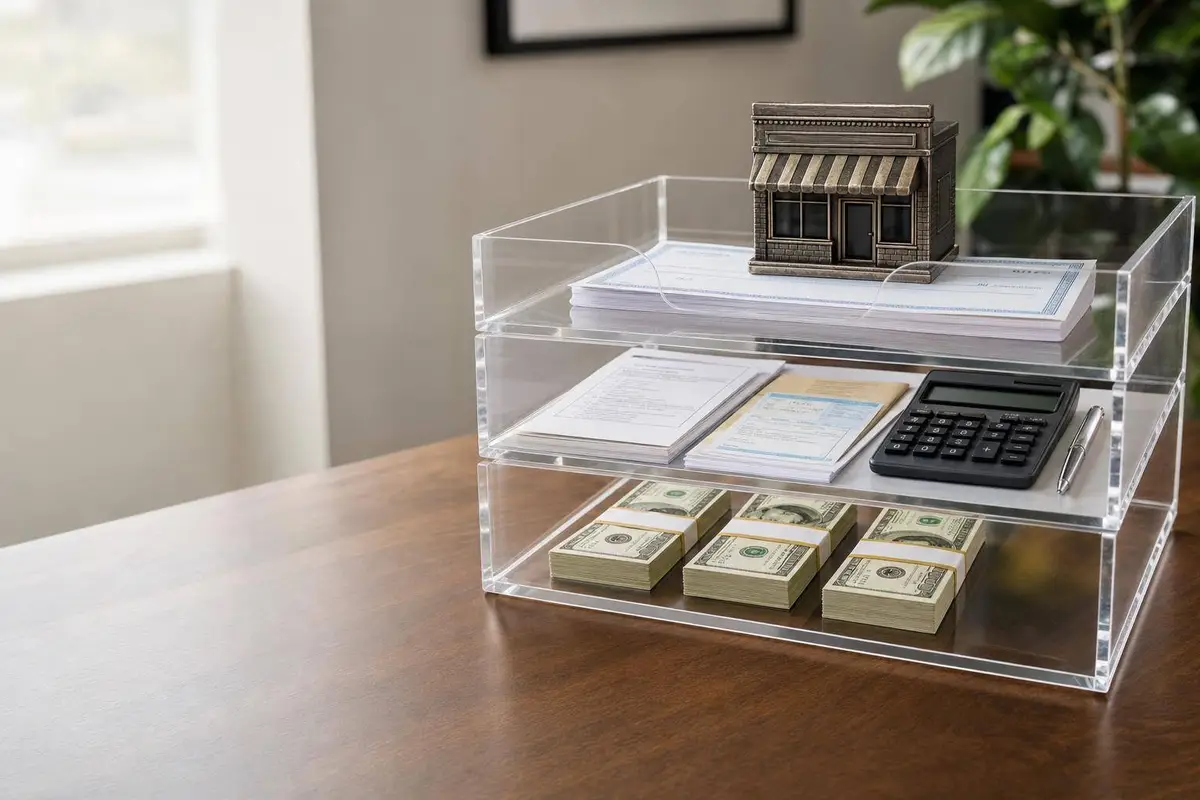
If I only budget for the down payment, I’m probably underestimating my cash need by a lot. On an SMB deal, total cash can end up $40,000 to $150,000+ above the equity check once I add legal, QoE, lender fees, SBA charges vs other financing, escrow, filings, and post-close cash.
Here’s the short version:
- A $1,500,000 deal with a $300,000 down payment can still need about $507,500 in total cash.
- On leveraged SMB acquisitions, all-in capital often lands around 115% to 131% of purchase price. Many buyers use SBA 7(a) loans to cover these costs while keeping down payments low.
- Diligence costs alone can run $10,000 to $50,000 in many deals.
- If a deal dies after LOI, sunk costs can hit $35,000 to $100,000.
- I should keep 1 to 3 months of expenses in reserve after closing, separate from cash used to finish the deal.
- A simple budget should cover four stages: pre-LOI, post-LOI diligence, closing, and Day One.
What matters most is simple: purchase price is just the start. I need to budget by timing of cash outflows, not just by category, and I need a cushion for legal overages, lender-required reports, and early ownership surprises.
A quick way to think about it:
| Stage | What I’m paying for | Why it matters |
|---|---|---|
| Pre-LOI | Light legal review, early lender talks, basic financial screening | Keeps early spend low |
| Post-LOI | QoE, legal docs, underwriting fees, appraisals, reports | This is where costs build fast |
| Closing | SBA fees, lender charges, escrow, filing costs, unpaid invoices | These hit at funding |
| Day One | Payroll, rent, insurance, inventory, cash cushion | Keeps the business running after takeover |
I’d also pressure-test the budget before closing: if sales drop 10% to 20% or collections slow from 30 to 60 days, the deal should still have enough cash to get through the first few months.
That’s the core idea of this article: build a line-by-line budget for the deal itself and for the first stretch of ownership, so I’m not short on cash right after closing.

SMB Acquisition: Total Cash Required by Deal Stage
Buyer Fees in Small Business Transactions

sbb-itb-a3ef7c1
Build the Budget by Deal Stage: Pre-LOI, Diligence, Closing, and Day One
The simplest way to build a transaction cost budget is to map costs by when the cash leaves your account, not just by cost type. In most deals, four stages set the schedule: pre-LOI, post-LOI diligence, closing day, and the first few weeks after you take over.
Pre-LOI Screening and Early Out-of-Pocket Costs
Before you sign an LOI, keep spending tight. A light legal review of the deal structure, an early pass on the financials, and a few lender calls are usually enough. The goal at this stage is simple: spend only what you need to decide whether exclusivity makes sense.
If you go too deep before exclusivity, you can burn money on a deal that never even gets to a signed LOI. That’s the trap. Pre-LOI work should help you screen, not fully prove the deal.
After LOI, the job changes from screening to verification.
Post-LOI Diligence and Financing Costs
Once the LOI is signed, costs start to add up fast. This phase often lasts 30–60 days, though more complicated transactions can take longer. In many small business acquisitions, total professional diligence costs often land in the $10,000–$50,000 range.
At this stage, legal drafting and QoE usually take up most of the budget. QoE is often the highest-leverage diligence spend because it pressure-tests EBITDA, adjustments, and working-capital assumptions before you’re locked in.
Lender-related charges also begin here. That can include application and underwriting fees, lender counsel or closing support fees, required appraisals, and any environmental or other third-party reports ordered after LOI.
One hard truth: once this work starts, most diligence fees are sunk. If the deal falls apart after LOI, buyers can easily eat $35,000–$100,000 in sunk costs from legal and QoE alone.
Closing-Day Fees and Immediate Post-Close Cash Needs
Closing day comes with a separate batch of costs. These are not the same as diligence expenses. Budget for SBA guaranty fees, use an SBA loan interest calculator to estimate debt service, lender origination and closing charges, escrow, filing and recording fees, broker fees if they apply, and any unpaid advisor invoices.
Just as important, closing costs are not the same as operating cash.
This is where many buyers get caught flat-footed. Day One still brings payroll. Rent doesn’t wait. Insurance premiums need to stay current. Inventory may need to be restocked. So you need an operating cushion set aside, completely separate from the cash used to close. That reserve sits on top of the equity needed to finish the deal.
The table below shows each stage, the main costs, timing, who usually pays, and whether the money can come back.
| Deal Stage | Key Cost Items | Timing | Paid By | Refundable? |
|---|---|---|---|---|
| Pre-LOI | Light legal review, preliminary financial analysis, early lender calls | Before exclusivity | Buyer | No |
| Post-LOI | QoE, legal drafting, lender underwriting, third-party reports, earnest money deposit if required | 30–60 days post-LOI, longer for complex deals | Buyer / Lender | Earned as work is completed; earnest money often yes during diligence window |
| Closing | SBA guaranty fees, lender origination and closing charges, escrow, filing and recording fees, broker fees if applicable, any unpaid advisor invoices | At funding | Escrow agent / Attorney | No |
| Day One | Payroll, rent, insurance, inventory, operating cushion | Immediately post-close | Buyer | N/A - operating cash |
Next, break the largest diligence lines into legal, QoE, and advisor fees.
Core Diligence Costs: Legal, QoE, and Other Advisors
Once the LOI is signed, diligence usually becomes the biggest spend you can still control. Legal, QoE, and specialist advisors tend to take up most of the post-LOI budget. The key is simple: scope each workstream to the deal's actual risk.
These are the biggest variable cost items at this stage, and they move based on deal size, structure, and how much risk sits inside the target.
Transaction Attorney Fees and What Drives Them
Your transaction attorney stays involved from LOI review all the way to the final closing binder. That work usually covers LOI review, purchase agreement negotiation, lender documents, lease assignment, key employee papers, and closing coordination.
What drives cost most? Deal structure, more than headline deal size.
An asset sale often means more schedule work. You need to spell out transferred contracts, assets, and liabilities, then handle consents and assignments. A stock sale shifts the focus toward tax and liability review. Add commercial real estate, and legal work expands again with title work, surveys, and environmental coordination on top of the purchase agreement. If the business and property sit in separate entities, you'll also need intercompany agreements and security documents.
As a rough guide, buyers should budget for legal fees in the following ranges:
| Deal Size | Typical Legal Fee Range | Key Complexity Factors |
|---|---|---|
| Under $1M | $5,000–$15,000 | Simple asset purchase, single entity, no real estate |
| $1M–$5M | $15,000–$50,000 | LOI, APA, seller note, lease assignment, closing coordination |
| $5M–$25M | $40,000–$100,000+ | Multi-entity, real estate, regulatory or licensing issues, complex reps and warranties |
SBA-financed deals usually land near the top of each range because lenders want more documents and more diligence support from counsel.
After legal, QoE is often the next big budget driver.
Quality of Earnings and Financial Diligence Scope
QoE is one of the highest-leverage diligence spends because it tests whether reported earnings can actually support the purchase price and debt service. In plain English, it helps answer the question: Do the numbers hold up under pressure?
A QoE provider looks at revenue quality by checking customer churn, contract terms, and whether revenue is recurring or project-based. They also normalize margins, validate add-backs, review working capital patterns, and test whether cash flow can cover debt service.
Scope and cost can vary a lot based on deal size and lender demands. A lighter SMB-level review, which fits smaller or cleaner deals, usually focuses on management-prepared financials, tax returns, and basic working capital analysis. That level of work often runs $10,000–$25,000. A full lender-ready QoE goes deeper, with revenue roll-forwards, customer concentration testing, deferred revenue analysis, accrual review, and formal reporting across 24–36 months of financials. That level commonly costs $25,000–$75,000+ depending on complexity.
One threshold matters here. Under SBA SOP 50 10 8.1, a formal QoE is explicitly required for acquisitions at or above a $3 million purchase price involving goodwill. Many SBA lenders set their own thresholds much lower, starting around $350,000–$500,000.
If you're using leverage, match the QoE scope to what the lender and the deal risk actually call for. You don't always need a full-scope package.
Diligence Line Items Buyers Often Miss
Legal and QoE get most of the attention, but other workstreams can still cost real money and catch real problems. The ones buyers most often miss include tax review, inventory verification, equipment and fixed-asset checks, customer concentration analysis, IT and cybersecurity diligence, environmental assessments, and insurance review.
The rule here is straightforward: order the reviews tied to the target's actual risk, lender requirements, or red flags that show up during diligence.
These items may look small one by one, but they add up fast when a deal has real operating risk. Approximate cost ranges for commonly missed items in U.S. SMB deals:
| Diligence Item | Typical Cost Range | When It's Necessary |
|---|---|---|
| Tax review | $3,000–$10,000 | Most deals; especially stock sales and multi-state exposure |
| Inventory check (third-party) | $5,000–$15,000 | Product businesses with significant inventory |
| Equipment/fixed-asset verification | $2,000–$10,000 | Asset-heavy or specialized equipment |
| Customer concentration analysis | $2,000–$7,500 | Deals where customer concentration is material |
| IT and cybersecurity review | $5,000–$25,000 | SaaS, tech-enabled, or data-sensitive businesses |
| Phase I environmental assessment | $2,500–$6,000 | Real estate included; manufacturing or chemical operations |
| Insurance review | $0–$7,500 | All deals; formal assessment for higher-risk operations |
Studies indicate that 40%–60% of attempted acquisitions uncover material issues during diligence that significantly affect deal terms or price. That's why it makes sense to buy the workstreams tied to actual deal risk or lender demands - not every item on a generic checklist.
Next comes the closing-budget layer: lender, SBA, escrow, broker, and filing fees.
Ready to Make Your Next Move?
Whether you're buying, selling, or investing — Clearly Acquired gives you the tools, data, and support to close with confidence.
Financing and Closing Costs: Lender, SBA, Broker, Escrow, and Filing Fees
Diligence costs tend to get all the attention. But lender fees, SBA charges, and settlement costs can add a meaningful amount to your deal budget. The smart move is to split them into lender, SBA, and settlement buckets before you calculate total cash required.
Lender Fees, SBA Costs, and Required Third-Party Reports
Until you have a term sheet, budget lender closing costs at 1%–3% of the loan amount. Ask for written fee schedules as early as possible, ideally during pre-approval, because these costs vary a lot by institution.
The SBA guaranty fee is one of the biggest closing costs. It’s based on the guaranteed portion of the loan, not the full loan amount. For larger 7(a) loans, the upfront fee is about 3.5% on the first $1 million of the guaranteed portion, plus 3.75% above that. On a $2 million SBA 7(a) loan with a 75% guarantee, that comes to roughly $53,000.
Most lenders roll this fee into the loan balance. So you usually won’t pay it in cash at closing. Still, it increases total project cost and monthly debt service. Put this number in your sources and uses, not in diligence.
Lenders also require outside reports to confirm collateral value and business value. A business valuation for SBA compliance usually costs $3,000–$7,500. If the deal includes commercial real estate, add a commercial appraisal at $3,000–$8,000+.
For asset-heavy businesses, machinery and equipment appraisals often cost $2,000–$5,000. Lien and UCC searches usually add a few hundred dollars per filing. These reports are required for SBA credit approval, so they belong in the budget as fixed costs, not nice-to-haves.
Broker Commissions, Escrow Charges, and Filing Costs
Seller-paid broker commissions still affect deal economics, even if they don’t come straight out of your pocket. They should show up in your sources and uses. If you hired your own buy-side advisor on a success-fee basis, that fee is a direct cash cost and needs its own line item.
For a standard SMB deal, plan on $1,000–$3,000 for escrow fees, plus $15–$50 per wire. UCC fees, entity filing fees, and recording charges may look small one by one, but they stack up fast across multiple filings.
Cost Comparison Table by Category
The table below breaks out the main closing costs by who pays them, when they show up, and whether they’re fixed or variable.
| Cost Category | Typical Payer | When Incurred | Fixed or Variable |
|---|---|---|---|
| SBA Guaranty Fee | Buyer | Closing | Variable (~3.5%–3.75% of guaranteed portion) |
| Lender Origination / Packaging Fee | Buyer | Closing | Variable (0.5%–2% of loan) |
| Business Valuation / Appraisal | Buyer | Diligence | Fixed ($3,000–$7,500) |
| Real Estate Appraisal | Buyer | Diligence | Fixed ($3,000–$8,000+) |
| Machinery & Equipment Appraisal | Buyer | Diligence | Fixed ($2,000–$5,000) |
| Phase I Environmental | Buyer | Diligence | Fixed ($2,000–$4,000) |
| Lien / UCC Searches | Buyer | Diligence | Fixed (hundreds per search) |
| Broker Commission (sell-side) | Seller | Closing | Variable (% of deal) |
| Buy-Side Advisory Fee | Buyer | Closing | Variable / success fee |
| Escrow / Settlement Fee | Buyer or split | Closing | Fixed ($1,000–$3,000) |
| Wire Transfer Fees | Buyer | Closing | Fixed ($15–$50 per wire) |
| UCC / State Filing Fees | Buyer | Closing | Fixed (tens to hundreds per filing) |
| County Recording Fees | Buyer | Closing | Fixed (per document) |
Because SBA equity is based on total project cost, every closing fee increases the cash you need to bring. These line items flow straight into total capital required.
Total Capital Required and a Practical Buyer Checklist
From Purchase Price to Total Cash Required
Once you've mapped legal, diligence, and closing costs, add reserves to see the actual cash need. The purchase price is only the opening number. When you stack on transaction costs, financing fees, working capital, and a contingency buffer, total capital required usually lands at 115–131% of the purchase price on a leveraged SMB deal.
Take a $2,000,000 acquisition. A common SBA structure might look like this:
- $200,000 of buyer equity
- $1,500,000 of senior debt
- $300,000 of seller financing
That may cover the purchase price, but it doesn't mean you're fully funded. Transaction costs, reserves, and contingency capital still sit outside that number, which can push the cash requirement much higher.
Before you commit, pressure-test the budget. Run a case where revenue falls 10–20% in year one. Then run another where a major customer moves from paying in 30 days to 60 days. If your capital plan can't handle those hits for at least six months without a covenant breach or missed payroll, the structure needs to change - not the math you hope will work.
A Simple Budgeting Framework Buyers Can Reuse
Once you know the full cash need, turn it into a line-item budget you can use on every deal. This doesn't need to be fancy. A simple spreadsheet is enough. Use one row per cost item and include these columns: Category, Description, Amount (USD), Expected Date, Payer, Source of Funds, and Contingency Reserve Allocation.
That last column matters more than many buyers think. A common rule of thumb is to add a 20–30% contingency on top of the base transaction-cost budget to cover scope creep in legal work, deeper QoE, or surprise third-party reports.
Group the rows by deal stage: pre-LOI, LOI to close, closing day, and 30–90 days post-close. That simple step forces you to think about timing, not just totals. And timing is where cash plans often break.
Conclusion: Key Numbers to Know Before You Close
A few numbers should be nailed down before you sign closing documents:
- Transaction costs are separate from purchase price; budget them as part of total capital required - roughly 3–5% of deal value for legal, QoE, and advisory fees, depending on deal size and complexity.
- The biggest misses come from legal and financing fees - scope creep in legal work and SBA-related charges like appraisals and third-party reports often come in above early estimates.
- SBA costs must be modeled explicitly - guaranty fees, required appraisals, and other third-party reports can materially increase the cash needed at close.
- Post-close liquidity matters as much as the closing statement - budget at minimum one to three months of operating expenses as a buyer-held cash buffer, separate from working capital left in the business.
The deals that go sideways in the first 90 days usually don't blow up because the business was bad. They blow up because the buyer ran out of runway. Build the full capital plan - not just the closing statement - so you're not scrambling on day one.
FAQs
How much cash do I need beyond the down payment?
Build a deal budget before the LOI so you don’t burn through cash at closing. A lot of buyers focus on the purchase price and forget everything around it. That’s where deals get expensive fast.
Transaction costs often land in the 5%–10% range of the purchase price. And diligence alone can run $10,000 to $50,000.
Your budget should also account for:
- lender and SBA fees
- broker fees
- escrow and filing costs
- integration costs
- post-close cash needs, including working capital and a 6–12 month reserve
Think of it this way: the price gets you the business, but the budget gets you through the deal and the months right after it.
Which acquisition costs are paid before closing?
Before closing, most buyers set aside 5% to 10% of the purchase price for transaction costs. That usually covers legal fees, accounting, due diligence, and broker fees.
It’s also smart to budget another 1% to 7% for integration costs. And after the deal closes, many buyers keep a reserve equal to 6 to 12 months of working capital so the business has enough cash to keep things moving.
How large should my post-close cash reserve be?
Plan for post-close cash needs as part of your full deal budget before LOI through closing. That budget should cover the purchase price, closing costs, QoE, lender and SBA 7(a) fees, escrow, and filing costs.
Then set aside enough cash for working capital and integration after close - usually 6–12 months - so you don't burn through cash at closing.
Related Reading
About the author
Principal & CEO/CIO
Samson Jagoras has 15+ years across finance, real estate, and business acquisitions. He began his career as a Futures & Commodities broker and later served as Chief Strategy Officer of an INC 500 marketing and technology firm, helping scale revenue from $1M to over $100M. Today he buys, builds, and advises a portfolio of companies with a focus on M&A, capital allocation, and operational strategy.