Fast Funding: The Pros and Cons of Online Working Capital Loans
Online working capital loans offer quick funding and simple applications, making them a go-to for small businesses needing cash fast. However, they come with higher costs and short repayment terms, which can strain cash flow. Here's a quick breakdown:

Fast Funding: The Pros and Cons of Online Working Capital Loans
Online working capital loans offer quick funding and simple applications, making them a go-to for small businesses needing cash fast. However, they come with higher costs and short repayment terms, which can strain cash flow. Here's a quick breakdown:
- Speed: Funds can be available in 1–3 days, sometimes even the same day.
- Cost: Interest rates start around 12% and can go much higher, especially for merchant cash advances.
- Ease: Applications are streamlined, with minimal paperwork compared to traditional banks.
- Flexibility: Loans are often unsecured, but repayment schedules can require daily or weekly payments.
| Factor | Online Loans | Bank Loans |
|---|---|---|
| Funding Speed | 1–3 days, sometimes same-day | Weeks to months |
| Interest Rates | 12%+ (up to 40% or more) | 2.5%–7% |
| Application Process | Simple, fast | Lengthy, detailed |
| Repayment Terms | Short, often daily/weekly | Long, monthly |
Key takeaway: If you need funds urgently and can handle higher costs, online loans might work. But for lower rates, traditional loans are better if time isn’t an issue.
How to Get Working Capital for Your Business: Options and Strategies Explained

1. Clearly Acquired
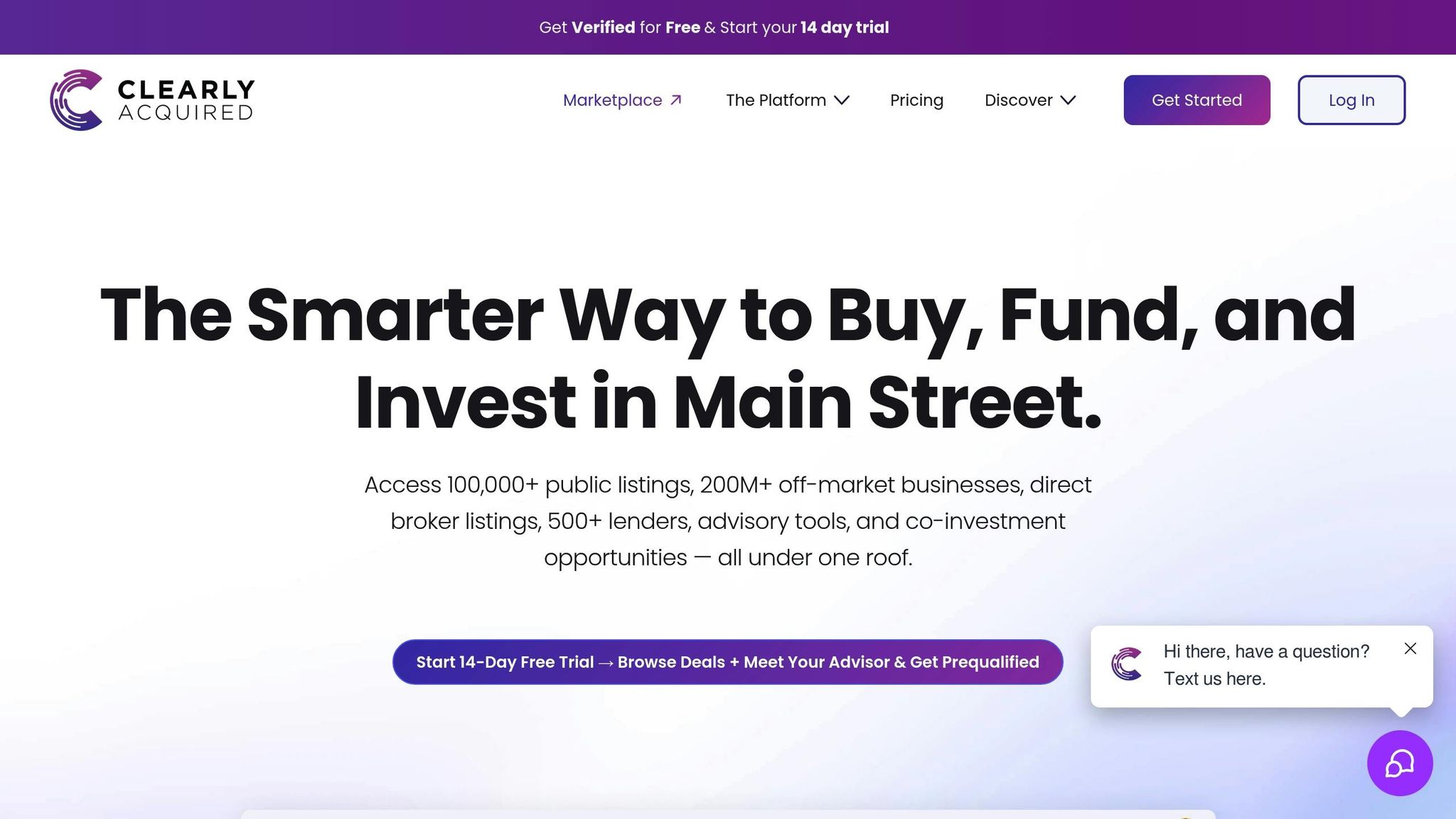
Clearly Acquired specializes in acquisition financing, combining advanced technology with expert support to help secure funding for purchasing companies or assets.
Funding Speed
One of the standout features of Clearly Acquired is its speed. Funding approvals can happen in as little as two weeks.
The platform uses technology to connect verified buyers with capital sources, cutting down on delays caused by excessive documentation. This streamlined process ensures faster access to the funds you need.
Ease of Application
Getting started is straightforward. First, create an account and build a profile that outlines your acquisition goals and financial capabilities. From there, the platform matches you with capital sources that align with your needs.
Unlike traditional online lenders, Clearly Acquired is tailored specifically for acquisition financing. Instead of completing generic loan applications, you’re crafting a detailed profile that not only attracts funding but can also appeal to potential acquisition targets.
Here’s what one client, Sydnie Whitmer, had to say about their experience:
"Once we reached out to Clearly Acquired, the service and speed of the loan process were exceptional. They saved us, and we will 100% use them in the future." - Sydnie Whitmer
This feedback highlights the platform’s personalized approach, offering a level of care and attention that many other online lenders might lack. On top of that, the funding terms are designed to complement the efficient application process, providing flexibility tailored to your acquisition goals.
Repayment Flexibility
While specific repayment terms aren’t outlined, acquisition financing through Clearly Acquired typically offers longer and more flexible repayment options. The platform ensures that buyers are connected with lenders who provide repayment structures suited to the unique needs of each acquisition.
2. Other Online Lenders
When it comes to securing funding quickly, online lenders offer a variety of options beyond acquisition financing. These lenders are known for their fast processes and unique features tailored to meet the needs of businesses.
Funding Speed
Speed is a major selling point for many online lenders. Take PayPal Working Capital, for example - it can approve and fund loans within minutes, with 99% of users giving high marks for its quick approval process.
Several other lenders also focus on same-day funding. OnDeck provides up to $250,000 in funding the same business day if all criteria are met. Credibly approves applications in as little as four hours and deposits funds the same day. Bluevine boasts a five-minute application process, offering instant transfers to Bluevine accounts or 24-hour transfers to external banks. Similarly, Stripe Capital ensures funds are deposited into your Stripe account by the next business day.
For slightly longer timelines, Fundbox offers next-business-day access to funds, while Fora Financial and National Funding complete the process within 24 to 72 hours. These options provide businesses with a range of choices depending on their urgency.
Cost of Borrowing
While online lenders offer convenience and speed, their rates tend to be higher than traditional banks. Banks typically charge interest rates between 6.54% and 11.7%, whereas online loans start at 14% APR and can climb much higher. For instance, merchant cash advances can carry APRs ranging from 40% to a staggering 350%. This means businesses must weigh the benefits of fast funding against the higher borrowing costs.
Ease of Application
Applying for funding through online lenders is often simpler than going through a bank. Only 12% of small business owners report difficulties with online loan applications, compared to 23% who face challenges with large banks. Many online lenders even offer prequalification tools, allowing borrowers to explore potential rates and terms without affecting their credit scores.
Repayment Flexibility
Flexibility in repayment is another area where online lenders shine. Many offer terms designed to adapt to a business's unique cash flow. Forward Financing, for example, provides flexible repayment options. Current includes AutoPay features to streamline payments, while Affirm specializes in installment loans at the point of sale. Scratch Financial focuses on medical financing without prepayment penalties or deferred interest, and OppFi's OppLoans provides diverse loan options along with resources to help borrowers understand rates and terms.
While online lenders deliver unmatched speed and convenience, businesses should carefully evaluate the trade-offs, particularly the higher costs, to ensure these solutions align with their financial goals.
sbb-itb-a3ef7c1
Ready to Make Your Next Move?
Whether you're buying, selling, or investing — ClearlyAcquired gives you the tools, data, and support to close with confidence.
Get Started FreeAdvantages and Disadvantages
Building on earlier lender profiles, let's break down the key benefits and risks of online working capital loans. These loans have reshaped how businesses access funding, but they come with trade-offs that require careful thought. Knowing both the upsides and downsides can help you decide if this option aligns with your business needs.
The Speed Advantage
One of the biggest perks of online working capital loans is how fast you can get the funds. Traditional bank loans often take weeks - or even months - to process. In contrast, online lenders can provide funding in as little as 1–3 days. This quick turnaround can be a lifesaver when you need to cover unexpected expenses or jump on a time-sensitive opportunity.
Convenience vs. Cost
Online lenders have made applying for loans much simpler, cutting down on paperwork and using alternative ways to assess creditworthiness. However, this convenience comes at a price. Interest rates for online working capital loans usually start at around 12%, significantly higher than the 2.5% to 7% range offered by traditional banks. Some products, like merchant cash advances, can have rates as high as 40%. While the process is easier, the higher cost is something to weigh carefully.
Accessible, But With Short Strings
Online lenders often work with businesses that might not qualify for traditional loans, such as startups or those with less-than-stellar credit. In fact, 71% of e-commerce businesses have turned to alternative financing, and fintech lending to small and medium-sized businesses has grown by 72.4% annually over the past five years. But this accessibility often comes with strings attached - like shorter repayment terms. Many loans require daily or weekly payments, which can put a strain on your cash flow if your sales don't meet expectations.
Credit Score Considerations
Taking on new debt can impact your credit score, especially with the shorter repayment cycles typical of working capital loans. To avoid defaults and protect your credit, you'll need to ensure your revenue is consistent enough to meet the repayment schedule. Careful budgeting and realistic sales projections are key.
| Factor | Online Working Capital Loans | Traditional Bank Loans |
|---|---|---|
| Funding Speed | 1–3 business days, sometimes same-day | Weeks to months |
| Interest Rates | Around 12%+ (merchant cash advances ≈40%) | Approximately 2.5% to 7% |
| Application Process | Streamlined with minimal documentation | Extensive paperwork required |
| Credit Requirements | More flexible; alternative data considered | Strong credit history required |
| Repayment Terms | Shorter, often daily/weekly payments | Longer, monthly payments |
| Loan Amounts | Lower maximum amounts | Higher lending capacity |
| Collateral | Unsecured | Often requires collateral |
The Cost of Miscalculation
The financial challenges of 2023 revealed a harsh reality: 60% of business owners struggled to manage existing debt due to rising interest rates. This highlights how essential it is to evaluate whether you can handle the higher costs often tied to online loans.
Choosing Wisely
Your decision should hinge on how quickly you need the funds and whether your cash flow can handle the repayment terms. If you're in a time crunch and have reliable, predictable revenue, the speed and ease of online loans might make the higher costs worth it. But if you have time to spare and qualify for traditional financing, the lower interest rates could save you significant money in the long run. Weigh factors like urgency, repayment ability, credit profile, and the terms offered by lenders to make the best choice for your business.
Conclusion
Online working capital loans have transformed how small businesses secure funding, offering speed and convenience that traditional banks often can't match. However, this ease of access comes with its challenges - namely, higher interest rates and shorter repayment terms, which can strain cash flow if revenues dip unexpectedly.
Before jumping into any loan, take a step back and assess your financial situation. Calculate the total cost of the loan, including interest and fees, and ensure your business can comfortably manage the repayment schedule. Without proper planning, high-cost debt can lead to financial trouble, damage your credit, and strain relationships with vendors or lenders.
"The repayment term is also known as the loan period, or the duration of time over which the borrower will complete repayment of the loan to the lender." - Jared Weitz, Founder and CEO of United Capital Source
When comparing lenders, dig deeper than just the interest rate. Pay close attention to the APR, which factors in all fees to give a clearer picture of the loan’s true cost. Be mindful of hidden charges like origination fees (1–5% of the loan amount), prepayment penalties (0–2%), and late fees (3–6% on overdue amounts).
If time permits, explore alternatives like SBA loans or business lines of credit, which may offer more favorable terms if you meet their qualifications. Balancing these options against your immediate funding needs and long-term goals will help you make a more informed decision.
For businesses with urgent needs, reliable revenue streams, and a solid plan for leveraging the funds, online working capital loans can be a practical solution. Just make sure the benefits outweigh the costs, and that the loan aligns with your broader financial strategy.
FAQs
How do online working capital loans compare to traditional bank loans in terms of costs and repayment terms?
Online working capital loans are known for their short repayment terms, typically lasting from just a few months to a couple of years. While they’re great for quick access to funds, they often come with higher interest rates, which can range significantly - anywhere between 6% and 75% APR. These loans are designed to meet short-term funding needs but can become costly over time.
In contrast, traditional bank loans offer longer repayment periods, often stretching over several years, and come with lower interest rates, thanks to stricter approval processes and reduced risk for the lender. Although they’re more cost-effective in the long run, bank loans lack the flexibility and speed that online loans provide. For businesses that need cash fast, online loans might be the better option, but it’s crucial to carefully consider the trade-offs.
How can businesses evaluate if they’re financially ready for the costs and short repayment terms of online working capital loans?
To gauge whether your business is financially prepared for an online working capital loan, start by taking a close look at your cash flow, assets, and liabilities. This step is crucial to ensure that taking on a loan won’t disrupt your day-to-day operations or strain your financial stability.
Next, pinpoint exactly why you need the funding and calculate the amount required. Borrowing only what’s necessary can help you avoid unnecessary costs and keep repayment manageable. It’s also important to evaluate whether your projected revenue will comfortably cover the loan payments, especially since these loans often come with shorter repayment terms.
By thoroughly understanding your financial standing and repayment capacity, you’ll be better equipped to decide if this type of funding aligns with your business goals.
What should businesses consider when choosing between fast online funding and traditional loans with lower interest rates?
When choosing between fast online funding and traditional loans, it's essential to consider factors like speed, cost, and flexibility. Online loans can be a great solution when time is of the essence, thanks to their quick approval processes and less stringent qualification requirements. That said, they often come with higher interest rates and shorter repayment periods, which might not suit every business.
On the other hand, traditional loans typically offer lower interest rates and more manageable repayment terms. The trade-off? They usually involve a longer approval timeline and stricter eligibility standards. To decide which route works best for your business, think about your cash flow, your ability to repay, and how urgently you need the money. These factors can help you align your financing choice with your overall goals.