Due Diligence for Business Buyers
What to verify before you close. Financial, operational, and customer diligence workflows used to confirm earnings quality and surface risk while there is still time to renegotiate.
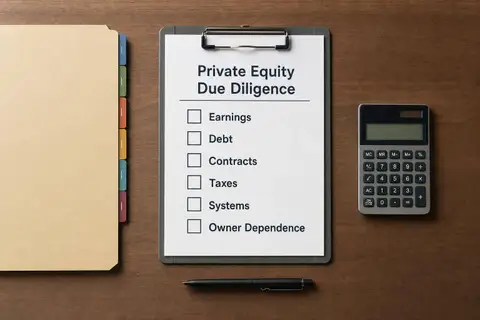
Private Equity Due Diligence Checklist For SMB Deals
Buy the facts, not the story: verify earnings, debt, contracts, taxes, systems, and owner dependence before closing an SMB PE deal.

Collaborative Diligence Platforms: Guide for SMB M&A
One shared workspace and issue log prevents SMB M&A diligence from becoming a chaotic scramble.

Legal Due Diligence Checklist Study: Common Gaps
Common SMB deal diligence failures: missing ownership, IP, employment, contract consents, and permits that delay closings or add post-close risk.

Manufacturing Due Diligence Checklist for Buyers
Checklist to screen safety, equipment, permits, quality, insurance, and lender risks before buying a manufacturing plant.

HR Due Diligence Questionnaire For Acquisitions
Checklist and document requests to uncover labor liabilities, key-person risk, and Day‑1 readiness that affect acquisition price and transition.

HR Due Diligence Q&A: Handbooks and Policies
Checklist for reviewing employee handbooks, policies, and acknowledgments in M&A, plus lookback guidance, counsel triggers, and deal impacts.
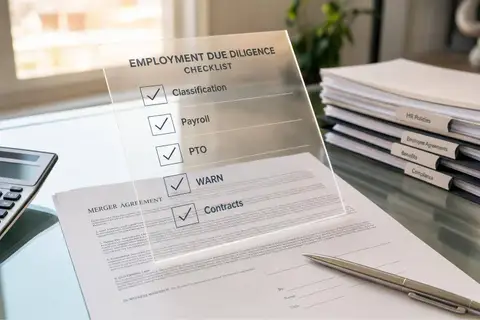
Employment Law in M&A: Buyer Due Diligence
Buyer checklist for employment risks in M&A—classification, payroll, PTO, WARN, contracts—and how issues affect price and closing.

Debt Due Diligence Checklist for SMB Acquisitions
A step-by-step checklist for cataloging loans, leases, tax balances, liens, and owner debt — and collecting the payoff letters and releases you need before funding an SMB acquisition.

Revenue Trends: How Buyers Spot Weakness
Flat revenue can hide churn, discounting, and slow collections. How buyers use DSO, A/R aging, order size, and source documents to verify revenue and reprice risk.

Consumer Confidence for SMB Revenue
Use consumer confidence as a stress test for SMB forecasts—match sentiment with sector KPIs and downside scenarios to pressure-test the revenue story before you buy.

7 Open Source License Risks in M&A Due Diligence
How GPL/AGPL, weak SBOMs, missing notices, and contract conflicts affect M&A value and remediation costs.

Pool & Spa Compliance in M&A Diligence
How licensing, certifications, permits, and records affect pool & spa deals — fixes, holdbacks, price cuts, and closing conditions.

Days Inventory Outstanding: 2026 Guide
Calculate DIO, read industry benchmarks, and use it to size working capital, spot inventory risk, and plan post-close cash.

Historical Cash Flow Analysis During Due Diligence
A business can show profit and still run short on cash. Here is how I reconcile tax returns, P&Ls, and bank records to verify repeatable cash flow, realistic add-backs, working capital, and debt capacity during due diligence.

Fraud Risk in Due Diligence Processes
Due diligence without fraud-focused checks is asking to overpay and inherit hidden liabilities. Learn the schemes, red flags, and frameworks to protect every acquisition.
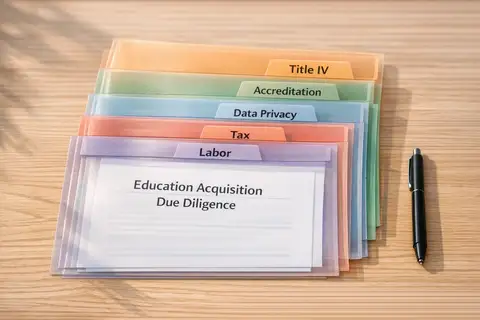
Top Compliance Risks in Education Acquisitions
Spot Title IV, accreditation, data privacy, tax, and labor risks in education acquisitions and mitigate them with thorough due diligence.

Logistics Due Diligence for M&A
When acquiring a company with logistics operations, you’re taking on more than revenue - you’re inheriting a supply chain with trucks, warehouses, contracts, and compliance requirements. Logistics due diligence helps you evaluate these areas to avoid hidden costs, risks, and inefficiencies that coul
How Sellers Hide Liabilities: Common Tactics
When buying a business, hidden liabilities are a major risk. Sellers often use tactics to conceal debts, legal issues, or financial obligations, inflating the business's value and leaving buyers with unexpected costs after the deal. These liabilities can include unreported debts, unpaid taxes, hidde

Key Person Risk in M&A: What to Know
Key person risk can make or break a merger or acquisition. This risk arises when a business depends heavily on one or two individuals, such as the founder or CEO. If these people leave or disengage, the business may face operational disruptions, loss of customer trust, and decreased value. For buyer

Checklist for Climate Risk in M&A Deals
M&A deals are now shaped by climate risks. Buyers are paying premiums for companies with strong ESG practices, while sustainability weaknesses lower valuations. Key risks include:
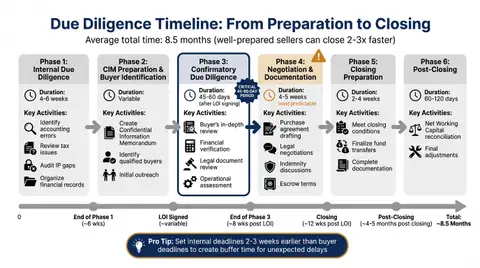
How to Survive Due Diligence for Lower Middle Market Companies
Preparing for due diligence can make or break your deal. For companies valued between $10 million and $100 million, the process is thorough, covering financials, legal records, and operational data. Buyers want clean, organized documentation to verify your business's value and identify risks. Here's
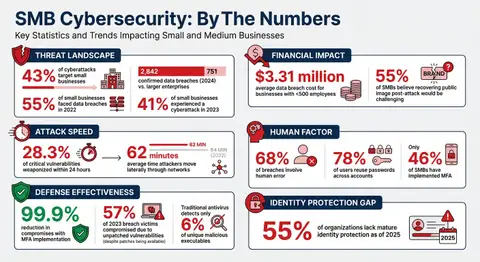
IT Vulnerability Checklist for SMB Buyers
When you buy a small or mid-sized business (SMB), you're also inheriting its cybersecurity risks - and the stakes are high. 43% of cyberattacks target small businesses, and the average data breach costs $3.31 million. Weak security can lead to data theft, ransomware, or even destroy the value of you

Throughput Metrics in M&A Due Diligence
Want to make smarter M&A decisions? Start by looking beyond the financial statements. Professional consultation services can help you navigate these operational complexities. Throughput metrics - like cycle time, lead time, and work-in-process (WIP) levels - offer a clear view of how efficiently
How to Evaluate a Business for Sale Like a Professional Investor
When buying a business, you need to evaluate it like a pro to avoid costly mistakes. Here's the key: focus on the financials, market position, and operations. Look for risks like customer dependency, hidden debts, or outdated processes. At the same time, identify opportunities for growth and profita

Cyber Due Diligence in SMB Acquisitions
Understand the importance of cyber due diligence in SMB acquisitions to mitigate risks and ensure successful integration.

Supply Chain Due Diligence: What Buyers Must Know
Supply chain due diligence is critical when buying a business, especially small and medium-sized ones. Why? Because a weak supply chain can lead to costly disruptions, regulatory violations, and reduced business value. Here’s what you need to know:

Tax Due Diligence for M&A Success: Expert Insights
Tax due diligence is essential for successful mergers and acquisitions (M&A), especially for small and medium-sized businesses (SMBs). It helps identify tax risks, hidden liabilities, and compliance gaps that could derail a deal. Without proper due diligence, buyers may inherit costly tax issues

Insurance Due Diligence in M&A Deals
Skipping insurance due diligence in M&A deals can lead to costly surprises. By reviewing insurance policies, claims history, and risk coverage, buyers can avoid inheriting liabilities or gaps in coverage. Here’s what you need to know:

How to Analyze Customer Base Overlap in Acquisitions
When acquiring a business, understanding customer base overlap is key. It reveals how much the two companies share the same customers, which impacts cost savings, revenue growth, and potential risks like sales cannibalization. Here's how to analyze it:

Cash Flow Forecasting in Business Acquisitions
Cash flow forecasting is a critical process in business acquisitions, helping buyers, sellers, and investors make informed decisions. It involves predicting cash inflows and outflows to assess financial viability, determine fair pricing, and secure funding. Accurate forecasts reduce risks, highlight

How to Assess Supply Chain Risks Before Acquisitions
When you're acquiring a business, ignoring supply chain risks can lead to costly surprises. Supply chain issues - like unreliable vendors, cybersecurity vulnerabilities, or regulatory non-compliance - can disrupt operations and hurt your bottom line. A thorough risk assessment before closing a deal

Labor Due Diligence Checklist for Buyers
When acquiring a business, understanding workforce-related risks is critical to avoid legal issues, maintain operations, and retain key employees. Labor due diligence focuses on assessing employee data, contracts, pay structures, and compliance with labor laws to identify potential red flags. Here's

Legal Due Diligence: Litigation Checklist
When buying a business, skipping a litigation review can lead to financial losses, disrupted operations, or even deal cancellations. This process identifies ongoing lawsuits, regulatory issues, or historical disputes that could impact the purchase price, financing, or future success of the deal. Her

How to Spot Cash Flow Fraud in SMB Deals
Cash flow fraud in small and medium-sized business (SMB) deals can lead to costly mistakes for buyers and investors. Sellers may manipulate financial records by inflating revenue, hiding expenses, or creating fake transactions, making a business appear more stable than it really is. Identifying thes

How to Handle Employee Liabilities in Acquisitions
When acquiring a business, one of the most overlooked yet critical aspects is managing employee liabilities. These liabilities - ranging from unpaid wages to unresolved benefits and compliance issues - can significantly impact a deal's financial and operational outcomes. If not addressed during due

Reddit Q&A: “Buying a small business—what questions should I ask during due diligence?”
Posted by u/SeriousBuyer2025:
Reddit Q&A: “When is it appropriate for a potential buyer to meet my employees—during due diligence or after the sale?”
Posted by u/SellerWithStaff:

Labor Law Due Diligence Checklist
Labor law due diligence is essential for identifying risks tied to employment practices during business acquisitions. It ensures compliance with wage laws, anti-discrimination rules, and safety standards while analyzing contracts, benefits, and litigation history. Key areas to review include:
Key Employee Retention: Best Practices for M&A
Losing key employees during mergers and acquisitions (M&A) can cost you - big time. Nearly 50% of key employees leave within the first year after a deal, and that number climbs to 75% within three years. This creates operational gaps, disrupts workflows, and damages customer relationships, all w

How to Assess Financial Fit in Acquisitions
70% of mergers and acquisitions fail to meet financial goals. Why? Poor financial fit. Assessing financial compatibility is crucial to avoid costly mistakes and ensure success. Here's how to evaluate financial fit step-by-step:

How to Assess Operational Risks in Acquisitions
70% of mergers and acquisitions fail to deliver expected value because of overlooked operational risks. Here's a quick guide to help you identify and manage these risks effectively:

Steps to Conduct Culture Due Diligence
Cultural due diligence is essential during business acquisitions to prevent conflicts and ensure smooth integration. Here's how to approach it effectively:

How to Spot Unusual Accounting Adjustments
Unusual accounting adjustments can distort financial statements, making it hard to assess a company’s true financial health. These adjustments often arise from non-recurring events like asset sales, legal settlements, or restructuring costs. Here's how you can identify and analyze them:

How to Assess Culture Fit in Acquisitions
Want to make your acquisition a success? Start by evaluating culture fit.

Checklist for Identifying Deal Red Flags
Avoid costly mistakes in acquisitions by identifying deal red flags early. These warning signs can highlight financial, operational, legal, or market risks that may jeopardize a transaction. Here's a quick overview of what to look for:

How to Spot Accounting Fraud in Due Diligence
Accounting fraud can cost businesses millions and lead to legal troubles. If you're acquiring a company, here's how to protect yourself:
10 Due Diligence Red Flags When Buying a Business
Buying a business? Before signing anything, watch out for these 10 critical red flags during due diligence to avoid costly mistakes:

The Comprehensive SWOT Analysis for Acquisition Entrepreneurs
For acquisition entrepreneurs, conducting a thorough SWOT analysis is essential to understand not just the financial viability but the overall health and potential of a target business. This analysis goes beyond mere numbers, delving into the intangible yet critical aspects that determine a busine

Before You Buy...Assess The IT Infrastructure