Acquisition Financing & Capital Stack
How buyers fund deals beyond a single loan: senior debt, seller financing and standby terms, unitranche and mezzanine capital, equity injections, and the lenders active in the lower middle market.

Gaming Deal Financing: Lender Rights and License Rules
How lenders should structure collateral, limit control rights, and plan for gaming-license approvals and enforcement delays.

Can Buyers Offset Claims Against Seller Note Payments?
Confirm contract and lender terms before withholding seller-note payments; follow notice, escrow, caps, and keep paying undisputed amounts.

Debt Service Coverage Ratio Calculator
Calculate DSCR using NOI or EBITDA, review debt coverage strength, and estimate the income needed to hit a target ratio.

Asset-Based vs. Cash Flow Loans for Business Purchases
Compare asset-based and cash-flow acquisition loans: how lenders size credit, reporting, covenants, and post-close cash needs.

When Convertible Debt Fits SMB Deal Structures
Use convertible debt to fill verified SMB funding gaps—model debt capacity, conversion, downside risks, and exit terms before closing.

Why Banks Reject Business Acquisition Loans
Why banks refuse acquisition loans: DSCR shortfalls, buyer weaknesses, and deal-structure problems—plus practical fixes.

7 Seller Note Repayment Structures in M&A
Compare seven seller-note repayment options by cash burden, repayment certainty, lender limits, and performance or refinancing risk.

How to Structure Seller Note Amortization
Define seller note terms, choose amortization (fully, balloon, or interest‑only), build a period-by-period schedule, and align closing docs.
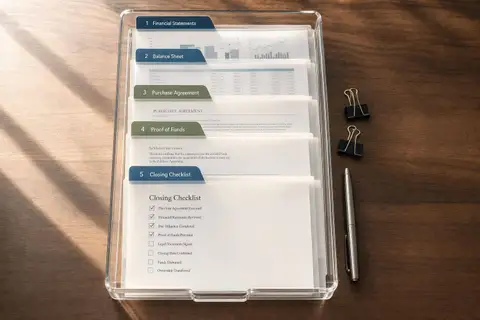
Bank Loan Documents for Business Acquisitions
Lender-ready checklist for acquisition loans: buyer and target financials, deal papers, equity proof, and common causes of delay.
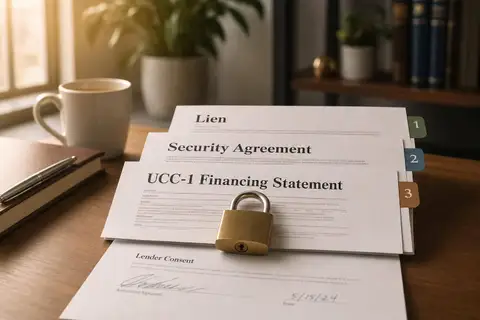
How Seller Notes Secure Collateral in SMB Deals
Seller notes secure assets only when the lien, security agreement and UCC-1 perfection align; lender consent and priority rules decide recovery.

Personal Guaranty Forms: Bank vs Seller Note
Signing both bank and seller personal guaranties can leave buyers personally liable for nearly the entire purchase price.
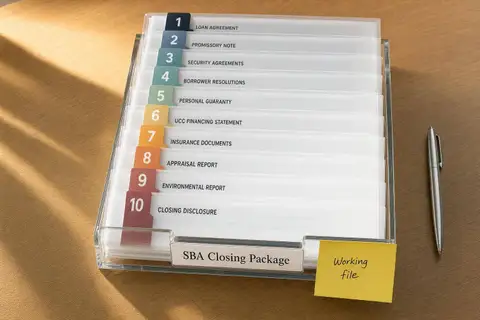
SBA Closing Package: 10 Documents Lenders Need
The 10 document groups SBA lenders require before funding, plus the expiration traps and third-party approvals that delay closings.

How Banks Review Creditworthiness for SMB Loans
Banks approve SMB loans on proof of repayment: DSCR and global DSCR, personal and business credit, post-close liquidity, guarantor strength, and a clean document package.
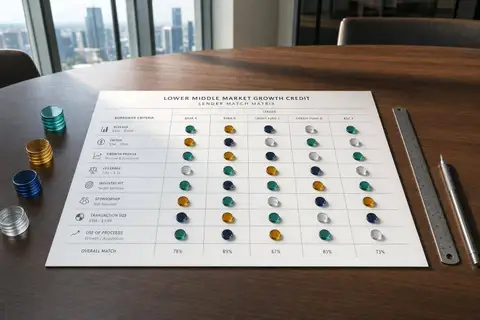
Lower Middle Market Growth Credit: Key Players
Match lower-middle-market growth deals to the right lender by screening EBITDA, facility size, underwriting style, and sponsor fit.

Mezzanine Debt for Acquisitions: 2026 Guide
Mezzanine debt can push total leverage from 3x–4x EBITDA to roughly 5x–7x — at an all-in cost of 12%–20%+. Here is how pricing, lender terms, industry fit, and deal prep work in 2026.

7 FF&E Appraisal Tips for SBA 7(a) Buyers
A low FF&E appraisal can shrink your SBA 7(a) loan and raise cash to close. Seven steps to confirm lender rules, verify assets, and document condition before underwriting.
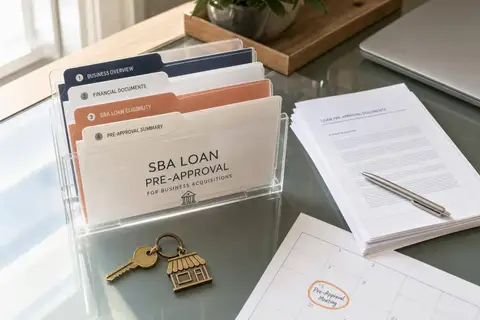
SBA Loan Pre-Approval for Business Acquisitions
SBA pre-approval is an early read from a lender on whether your acquisition looks financeable. Here is how buyer fit, documents, and timing work before the LOI.
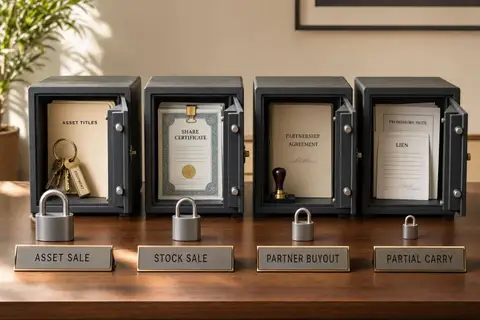
Seller Note Security by Deal Type
Asset purchases usually give the seller the strongest backup, stock deals come next, and partial carry or standby notes often leave the seller leaning on note terms more than property.

SBA 7(a) Seller Notes: Standby Rules
When does a seller note count toward SBA 7(a) equity? Full 24-month standby, subordination, and aligned docs decide closing cash needs.

Seller Note & Earnout Deal Structure
How to combine seller notes and earnouts in SMB deals: SBA stacks, subordination, tax treatment, drafting essentials, and mistakes to avoid.
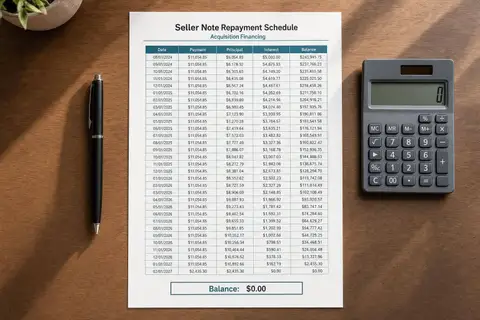
Seller Note Repayment Schedule for Acquisitions
Build a seller note repayment schedule that matches the signed note line-by-line with dates, payments, interest, principal, and a $0.00 final balance.

Escrow Holdbacks in Business Sales 2026
SMB deals move to risk-specific escrows: typical 5–15% holds, R&W lowers to 0.3–1%, releases often at 12 months.
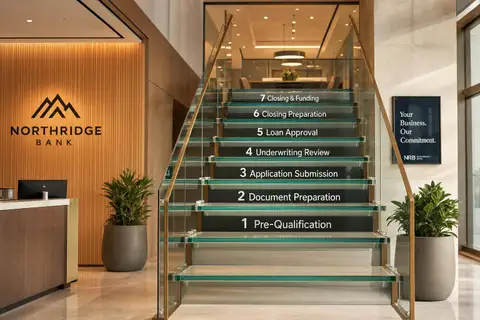
Bank Loan for SMB Acquisitions: 7 Steps
Bank approvals hinge on clean financials and a clear structure — follow seven lender-driven steps from pre-qualification to closing.

5 Funding Models for Senior Mobility Partnerships with Healthcare
Five funding models for senior transportation partnerships with healthcare—Medicaid NEMT, Medicare Advantage, value-based care, hospital contracts, and blended grants—with trade-offs and why to avoid >40% payer reliance.

Hybrid Debt Warrants: Risks & Rewards
Compare hybrid debt (with or without warrants) and equity—trade-offs in dilution, cost of capital, cash flow, and accounting complexity.

Fintech Lenders vs. Traditional Banks: Which Is Better for Your Small Business?
Fintech lenders or traditional banks? A clear, honest comparison of speed, rates, approval rates, and when to choose each — so you can make the right call for your business.

Best Fintech Lenders for Equipment Loans in 2026: Top Picks for SMBs
The top 7 fintech lenders for equipment financing in 2026 — compared by loan size, credit minimums, down payment, equipment types, and funding speed.

Working Capital Loan vs. Line of Credit: Which Is Right for Your Business?
Working capital loan or business line of credit? A practical breakdown of how each works, what they cost, and when to choose one over the other.

Best Fintech Lenders for Business Lines of Credit in 2026
Top 7 fintech lenders for business lines of credit in 2026 — credit limits, fees, repayment options, and qualification requirements compared.

How to Qualify for a Fintech Business Loan in 2026: Requirements, Tips & Strategies
What fintech lenders actually evaluate when underwriting a business loan, the minimums by loan type, and step-by-step tactics to improve your approval odds.

Best Fintech Lenders for Working Capital in 2026: Top Picks for SMBs
A side-by-side breakdown of the top 7 fintech working capital lenders for SMBs in 2026 — including rates, credit minimums, funding speed, and the best fit for your business.

Best Fintech Lenders for SMBs in 2026
The definitive 2026 pillar guide to the best fintech lenders for U.S. small and mid-sized businesses — ranked by speed, transparency, flexibility, and product range across working capital, lines of credit, and equipment loans.