7 FF&E Appraisal Tips for SBA 7(a) Buyers
A low FF&E appraisal can shrink your SBA 7(a) loan and raise cash to close. Seven steps to confirm lender rules, verify assets, and document condition before underwriting.
 Samson JagorasPrincipal & CEO/CIOAugust 3, 2026
Get matched with the right lender for your business
Compare offers from our vetted network. Pre-qualify in minutes — no impact to your credit.
If an FF&E appraisal comes in low, your SBA 7(a) loan can shrink and your cash to close can go up. That’s the short version.
When I read this piece, the main message was clear: don’t treat the FF&E appraisal like a side task. For many SBA 7(a) deals, it can affect timing, collateral support, and the final loan structure.
Here’s the article in plain English:
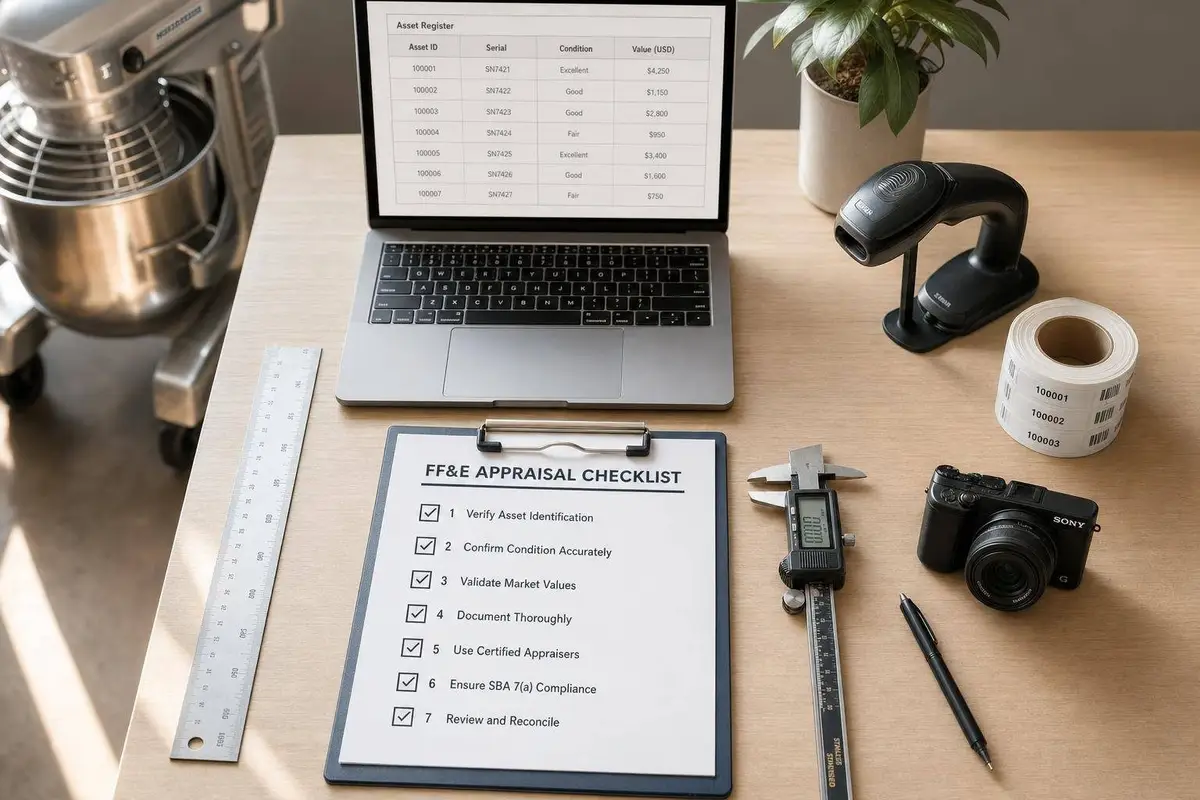
- I need to confirm early if the lender even requires an FF&E appraisal
- I should order it fast so closing does not get pushed back
- I need to give the appraiser a clean, exact asset list
- I should verify make, model, age, and serial numbers
- I need proof of condition, maintenance, and working status
- I should confirm the report uses the lender’s required liquidation standard
- I need to review the report for loan and cash-to-close impact before approval
A few facts stand out. The article says lenders generally require an FF&E appraisal under SBA SOP 50 10 7.1 when acquired FF&E is over $250,000, though some lenders use lower internal cutoffs. It also points out that lenders often want liquidation value or orderly liquidation value, not business value or replacement cost.
So if I’m buying a business with SBA financing, the job is simple: get expert consultation on lender instructions, match the appraisal to the bill of sale, and catch report issues before underwriting gets stuck.

Why FF&E Appraisals Matter in SBA 7(a) Deals
Lenders pay close attention to FF&E because it shapes the SBA 7(a) collateral package. In plain English, this report can affect collateral coverage, underwriting, and how much cash a buyer needs to bring to closing.
What FF&E Includes in a Business Purchase
FF&E can include:
- Office furniture and desks
- Shelving or display fixtures
- Commercial kitchen equipment
- Machinery
- Vehicles used in operations
- Computers
- Point-of-sale systems
- Other operating equipment and physical assets
When a Lender May Ask for an FF&E Appraisal
A lender is more likely to ask for an FF&E appraisal when those assets make up a large part of the collateral, are tough to verify, or seem higher than the amount shown on the balance sheet. That’s why the first move is simple: confirm whether your lender’s rules even trigger a standalone appraisal, especially when comparing SBA 7(a) loan terms vs. other financing options.
FF&E Appraisal vs. Business Valuation
A business valuation looks at the company as a going concern. An FF&E appraisal looks only at the physical assets. That difference matters because lenders use each report for a different part of underwriting.
It helps to confirm the lender’s report requirements early so valuation, underwriting, and closing stay in sync. Once you know what triggers the report, the next step is getting the asset list and supporting details right.
1. Confirm the Lender’s Appraisal Trigger
Before you order anything, confirm whether your lender needs an FF&E appraisal and where the cutoff sits.
Lender Requirement
Under SBA SOP 50 10 7.1, lenders generally require an FF&E appraisal when the value of the acquired furniture, fixtures, and equipment is more than $250,000. Some lenders use lower internal triggers.
Borrower Documentation
Once you know the trigger, get the lender’s requirements in writing before you order the report. Make sure the trigger, scope, and approved appraiser requirements are all confirmed in writing first.
Closing Impact
This report can affect the SBA loan timeline, so treat it like a closing-critical item. If the lender requires an appraisal, line it up early so underwriting and funding don’t get held up.
2. Order the Appraisal Early to Avoid Closing Delays
Once the lender confirms the trigger, order the FF&E appraisal right away. That one step can help keep your closing date on track.
Lender Requirement
A late FF&E appraisal is a common reason SBA 7(a) deals get delayed. The lender usually can’t finish underwriting until the appraisal is done and meets SBA rules.
Closing Impact
If you wait too long, the appraisal can turn into the bottleneck that slows loan approval. That’s why it makes sense to build it into your business acquisition checklist from day one.
Report Credibility
Paperwork matters here. If the file is incomplete, or the report isn’t well supported, lender review can stall. The same thing can happen if the appraiser isn’t qualified. A smart move is to use the appraisal timeline to work backward from your target closing date.
3. Submit a Complete FF&E Asset List
Once you’ve confirmed the appraisal trigger, the next step is simple: give the appraiser a complete FF&E asset list. Build it from the lender’s request and the appraiser’s scope before the inspection starts.
The goal here is pretty straightforward. You want the appraiser to know exactly what is included, where it is, and how to identify it without guesswork.
List every included asset and include:
- Description and quantity
- Location within the business
- Make, model, and serial number
- Purchase date and original cost
- Current condition
It also helps to clearly separate included assets from excluded items. That keeps the appraiser from overstating value or counting the same item twice. A clean list can speed up the review and cut down on lender follow-up.
Once the schedule is done, verify each asset’s age, make, model, and serial number.
4. Verify Age, Make, Model, and Serial Numbers
Once the list is done, check every item against the assets on-site. The details need to line up exactly with the inspection and the asset schedule: make, model, serial number, and asset tag.
If the data is wrong or missing, it can hurt the appraised value, trigger discrepancies during the lender’s review, or lead to a second site visit that slows down closing. That’s the kind of small mistake that turns into a big headache.
Before the appraiser arrives, note any missing labels, unreadable serial numbers, and clear replacements. That way, the report matches what is actually on the floor, not what someone assumed was there.
Next, document condition and operating status, since age alone does not determine value.
5. Document Condition, Maintenance, and Operational Status
Once the asset list lines up with the equipment on-site, the next step is simple: document the actual condition of each item.
Age matters, but usable condition matters more. What counts is how the asset performs today. That has a direct effect on liquidation value and on how well the collateral backs the loan.
Before the appraiser wraps up the report, gather these details for each asset:
- Wear level: light, moderate, or heavy
- Maintenance history: service logs or repair records
- Operational status: working, needs repair, inactive, obsolete, or out of service
Don’t leave condition claims hanging on their own. Pair each one with proof, such as a service log, repair invoice, or maintenance record. That gives the appraiser support for the value conclusion and gives the lender a clean file to review.
Once condition is documented, confirm that the appraiser is using the right value standard.
6. Confirm the Report Uses the Required Value Standard
A clean asset list can still lead to the wrong number if the appraiser uses the wrong value basis.
Condition matters, of course. But the value standard is what turns that condition into the collateral value a lender will actually use.
Ask the appraiser to confirm whether the lender wants liquidation value, orderly liquidation value, or another lender-approved basis. For SBA 7(a) and 504 loans, lenders usually want one of those two standards, not business value or replacement cost.
That choice can change the collateral value shown in the report. And that can affect how much the lender is willing to advance.
Once the value standard is confirmed, review the report with that lens in mind. Then check how it may affect loan structure and closing.
7. Review the Appraisal for Financing Impact Before Signing Off
Once you’ve confirmed the value standard, look at the report with financing in mind. At this stage, an appraisal problem can turn into a loan amount problem fast. It can also slow down funding if no one catches it early.
Compliance and Value Basis
Check that the report is USPAP-compliant and prepared by a qualified appraiser with relevant M&E credentials. Then confirm that the value conclusion lines up with the lender’s required value basis before you approve the report.
Closing Impact
If the appraised value comes in lower than expected, ask the lender how that changes:
- loan proceeds
- cash needed at closing
Also compare the report against your asset list and condition notes before you sign off. If something is off, fix it before approval so it doesn’t hold up funding.
Use the borrower checklist below to confirm the file is ready for lender review.
Borrower Checklist for Lender Review
Use this checklist to catch the file issues that most often slow lender review.
| Core Topic | What Lenders Want | What Borrowers Should Provide | Delay Impact If Missing |
|---|---|---|---|
| Appraisal Trigger | An independent FF&E appraisal when FF&E exceeds the lender’s appraisal threshold or is material to collateral under SBA SOP 50 10 | Signed purchase agreement and a preliminary asset list | Underwriting stalls until the lender decides whether an appraisal is required |
| Asset List Match | A one-to-one match between the appraisal inventory and the Bill of Sale | A spreadsheet of every asset included in the sale | Closing is delayed while the lender sorts out gaps between the appraisal and the Bill of Sale |
| Asset Identifiers | Verified make, model, and serial numbers for each asset | A seller depreciation schedule tied to the appraiser’s inventory | Items without verified identifiers may be left out of collateral |
| Condition Support | Evidence that high-value assets are operational and in documented condition | Maintenance logs, or photos or videos showing equipment operating | Missing condition support can lead to lower loan-to-value ratios |
| Value Basis | The correct value basis in writing, typically Orderly Liquidation Value or the lender’s required liquidation basis, confirmed before the appraiser begins | Written confirmation from the lender of the required value standard | A report using the wrong value basis may need revision before the lender can review it |
| USPAP | A report prepared in accordance with the Uniform Standards of Professional Appraisal Practice | Confirm the report states USPAP compliance | Noncompliant reports can delay or block closing |
Once these items line up, the appraisal is ready for lender review.
Two checks matter more than people think. First, confirm the required value basis before the appraiser starts. Second, review the report’s definition of value and limiting conditions before you send it in. Those two details can save a lot of back-and-forth.
Conclusion
FF&E appraisal prep can shape both how fast you close and how much cash you need at closing. Buyers who leave the appraisal for later often end up scrambling to cover a bigger equity check or sitting around waiting for report revisions while the timeline slips.
The main takeaways are simple: confirm lender instructions first, submit a verified asset list, and review the appraisal’s financing impact before you sign off.
Accurate asset data and clear support help cut lender revisions and keep underwriting moving. That prep matters when underwriting is tight.
Use the checklist above before lender review, then move to closing with fewer revision requests.
If you’re navigating SBA 7(a) and 504 loan qualifications, Clearly Acquired can help you move from diligence to close.
FAQs
What happens if the FF&E appraisal comes in low?
A low FF&E appraisal can affect closing because the appraisal may shape how the deal gets reviewed and financed.
For SBA 7(a) buyers, a few checks matter:
- Review your lender’s requirements
- Make sure the asset list is accurate
- Look closely at the report’s age and condition notes, since those details can affect value
If the report comes in low, even small errors in the inventory or condition notes can change how the lender looks at the deal.
Does every SBA 7(a) deal need an FF&E appraisal?
Not every SBA 7(a) deal needs an FF&E appraisal. It depends on the details of the deal and the lender’s rules.
If an appraisal is required, it can slow down underwriting and push back closing. That’s why buyers should check for this early, not halfway through the process.
What should I give the appraiser before the inspection?
Before the inspection, give the appraiser the information they need to support a reliable appraisal. Doing this helps keep the review accurate, consistent, and easier to complete.
Include the relevant records, policies, guardrails, and any escalation rules tied to the appraisal process.
Find the right lender for your business
Whether it's working capital, an SBA loan, or acquisition financing — we'll match you with the right capital partner.
About the author
Principal & CEO/CIO
Samson Jagoras has 15+ years across finance, real estate, and business acquisitions. He began his career as a Futures & Commodities broker and later served as Chief Strategy Officer of an INC 500 marketing and technology firm, helping scale revenue from $1M to over $100M. Today he buys, builds, and advises a portfolio of companies with a focus on M&A, capital allocation, and operational strategy.