Bank Loan for SMB Acquisitions: 7 Steps
Bank approvals hinge on clean financials and a clear structure — follow seven lender-driven steps from pre-qualification to closing.
 Samson JagorasPrincipal & CEO/CIOJuly 14, 2026
Get matched with the right lender for your business
Compare offers from our vetted network. Pre-qualify in minutes — no impact to your credit.
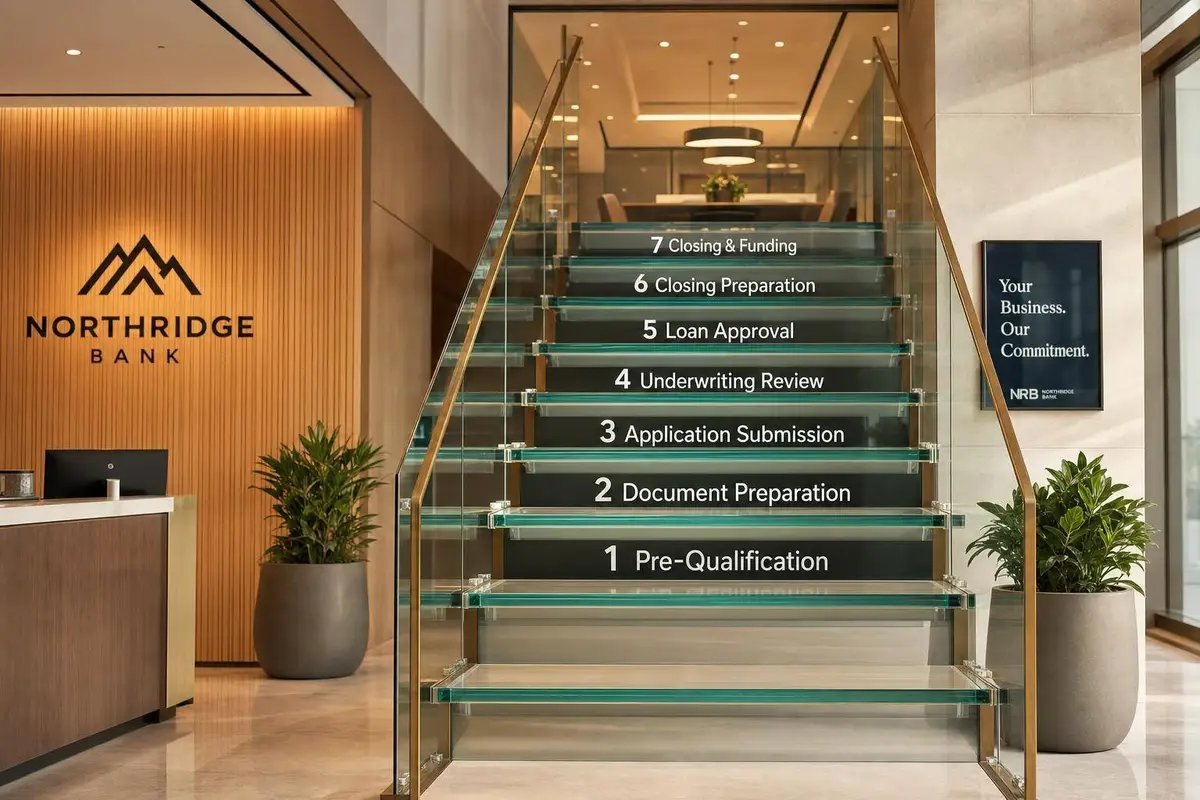
If I want a bank loan for a small business buyout, I need to clear 7 steps: pre-qualification, deal review, document prep, underwriting, credit review, loan terms, and closing. Most lenders are asking the same basic questions: Can I run the business? Can the business pay the debt? Is my file clean enough to review without delays?
Here’s the short version:
- Step 1: Pre-qualification — the bank checks my credit, cash, income, net worth, and work history.
- Step 2: Deal review — the bank checks the target’s cash flow, margins, industry risk, and deal setup.
- Step 3: Document prep — I gather buyer, business, deal, and entity records in one file.
- Step 4: Underwriting — the bank tests DSCR, leverage, seasonality, and customer/vendor concentration.
- Step 5: Credit review — the credit team decides yes, no, or yes with conditions.
- Step 6: Loan terms — I review rate, amortization, collateral, guarantees, covenants, fees, and prepay rules.
- Step 7: Closing — I clear final conditions, sign documents, and fund the deal. To streamline this process, many entrepreneurs use a deal flow management platform to organize lender requirements.
A few numbers matter a lot here. For many SMB loans, lenders focus hard on TTM cash flow, DSCR, and the buyer’s equity injection. Even a small change in amortization can shift the monthly payment by hundreds or thousands of dollars on a loan over $500,000.

Buying a Business? Here’s What Banks Want to See

Quick Comparison
| Step | What the bank is checking | What can slow it down |
|---|---|---|
| 1. Pre-qualification | Buyer fit and repayment strength | Weak credit, low liquidity, limited experience |
| 2. Deal review | Cash flow and deal setup | Poor margins, risky industry, thin working capital |
| 3. Document prep | File quality and completeness | Missing records, messy files, back-and-forth requests |
| 4. Underwriting | Debt repayment and risk | Low DSCR, high leverage, concentration issues |
| 5. Credit review | Final loan decision | Open questions, weak structure, missing support |
| 6. Loan terms | Payment burden and restrictions | Tough covenants, short amortization, extra fees |
| 7. Closing | Final conditions and funding | Late reports, incomplete signatures, stale documents |
What this means for me is simple: the deal does not move on story alone. Banks want clean numbers, a clear structure, and prompt answers. If I prepare those parts early with expert advisory services, I give the loan a much better shot.
Steps 1–2: Pre-qualification and initial deal review
Step 1: Pre-qualification — how banks screen buyer fit and repayment capacity
Pre-qualification is the bank’s first pass. Before a lender digs into the business you want to buy, it wants to know if you look like someone who can handle acquisition debt.
At this stage, lenders usually look at your personal credit, liquidity, annual income, net worth, and relevant industry or management experience. The goal is pretty simple: they’re judging buyer fit and repayment capacity. In plain English, they want to know whether you could still carry the debt if the business hits a rough patch after closing.
It helps to come prepared with a short deal summary. Include the purchase price, equity injection, requested loan amount, and a simple estimate of post-close cash flow. That gives the lender enough to decide whether the deal deserves a deeper look.
If you pass this first screen, the bank moves on to the business and the deal itself.
Step 2: Deal review — how banks assess the target business and transaction structure
Next, the bank’s attention shifts from the buyer to the target company.
The first deal review centers on the company’s historical cash flow, margins, and industry risk. The lender is trying to answer one core question: can the business’s earnings support the debt after closing? To do that, it looks at how the company has performed over time and whether that cash flow lines up with the proposed acquisition debt.
Banks also review the proposed transaction structure. That usually means looking at whether the deal includes a seller note, whether earnouts are part of the purchase, and how much working capital the business will need once the deal closes.
How Clearly Acquired can help before a full application

Clearly Acquired helps buyers get their deal file into shape before a full application. It helps organize acquisition data, verify financial information, and complete pre-qualification with financial verification.
Its AI-powered platform reviews deal financials, flags risk factors, and matches buyers with lenders based on actual underwriting criteria. That gives buyers a cleaner file before they move into full underwriting.
Steps 3–5: Build the loan package and move through bank risk review
After the first review, the process shifts into document diligence. At this stage, a clean file can move things along faster. It also gives the lender a simpler path into underwriting.
Step 3: Document preparation — building a lender-ready file
Banks confirm the deal through documents. So your job is simple: make the file easy to review and easy to check.
Put everything into four sections:
- Buyer financial information
- Business financial information
- Deal documents
- Entity formation records
When files are scattered, review slows down and follow-up questions pile up. A well-organized file helps show the cash flow, deal structure, and working capital assumptions that are already being reviewed.
Clearly Acquired can centralize the deal room and organize lender-ready files.
Step 4: Underwriting — how banks analyze cash flow, collateral, and risk
Underwriting is the bank’s detailed risk check. This is where the bank tests whether the deal can repay on schedule.
Banks pay close attention to DSCR (debt service coverage ratio) and trailing-twelve-month (TTM) results. They also review leverage, seasonality, and concentration risk. If the business depends heavily on a small number of customers or vendors, the deal may look riskier. Those findings then move straight into credit review.
Step 5: Credit review — how the bank makes its approval decision
Underwriting builds the risk picture. Credit review is where the committee makes the final approval decision. Put plainly: underwriting looks at risk, and credit review decides yes, no, or not yet.
The committee weighs the 5 Cs: character, capacity, capital, collateral, and conditions. A conditional approval means the bank wants more information or changes to the deal before it gives final approval. Next comes term review and closing.
Steps 6–7: Negotiate loan terms and close the deal
Once credit approves the deal, the next step is to lock in the loan terms and clear the final items needed to close.
Step 6: Loan terms — what to review, negotiate, and watch out for
When you get the bank’s commitment letter, read it closely. This is where the deal gets more concrete. You can still negotiate some parts, and you’ll also need to clear any closing conditions before the money is released.
Start with the interest rate structure and amortization. A lower rate can look good at first glance, but a shorter amortization can push the monthly payment up. That can squeeze cash flow right after closing. Before you sign anything, run the monthly payment numbers so you know what the loan will feel like in practice.
Then look at the rest of the package:
- Collateral
- Guarantees
- Covenants
- Fees
- Prepayment penalties
These terms affect how much room you have after closing. They also shape what it may cost to refinance or exit the loan later.
Step 7: Closing — clearing conditions and funding the acquisition
Once the terms are set, the file moves into final conditions, signatures, and funding.
Closing starts after credit approval, when the lender sends its final conditions. At this stage, small delays can slow everything down. Keep documents complete, and make sure third-party reports stay on schedule so funding doesn’t get stuck.
When all conditions are cleared, the parties can sign and fund the acquisition.
Where Clearly Acquired fits during structuring and close
This is the part where coordination matters most. Clearly Acquired helps manage deal documents, lender communication, and capital stack decisions through closing. Its debt brokerage and capital advisory team can structure SBA, conventional, seller-financed, and mezzanine pieces in one process.
Conclusion: What buyers should do before they apply
Banks fund SMB acquisitions when the buyer can repay, the business can carry the debt, and the file is complete. That’s why prep work before submission often decides whether review moves fast or the deal gets stuck.
Before you apply, clean up the financials and sort out obvious credit problems. Handling those issues early can cut delays before underwriting even begins. Send in a lender-ready package with clean numbers, realistic projections, and a clear deal structure.
Treat the commitment letter like a binding checkpoint, not just paperwork. Read every term before you sign.
Clearly Acquired can help structure financing and coordinate lender communication from pre-qualification through close.
FAQs
How long does the loan process usually take?
The timeline can vary based on the deal, the lender’s review, and how fast documents are prepared and submitted. In most cases, the process moves through pre-qualification, deal review, document prep, underwriting, credit review, loan terms, and closing — often 45 to 90 days end to end for a well-organized file, longer if information is missing.
What DSCR do banks typically want to see?
Most banks want to see a debt service coverage ratio of at least 1.25x on SMB acquisition loans, meaning the business generates $1.25 of cash flow for every $1.00 of annual debt service. Some lenders push for 1.35x or higher on riskier industries, thinner margins, or heavier leverage. The exact minimum can change by lender, loan program, and industry.
Can I still qualify with limited industry experience?
Yes, it’s possible, but it makes approval harder. Lenders offset limited industry experience by looking for stronger buyer fundamentals: solid credit, real liquidity, a larger equity injection, and general management experience. It also helps to keep the seller involved through a training period or transition agreement, and to have an operations lead in place with direct industry background.
Find the right lender for your business
Whether it's working capital, an SBA loan, or acquisition financing — we'll match you with the right capital partner.
About the author
Principal & CEO/CIO
Samson Jagoras has 15+ years across finance, real estate, and business acquisitions. He began his career as a Futures & Commodities broker and later served as Chief Strategy Officer of an INC 500 marketing and technology firm, helping scale revenue from $1M to over $100M. Today he buys, builds, and advises a portfolio of companies with a focus on M&A, capital allocation, and operational strategy.