Search Fund Capital Stack: Sidecar Deal Examples
How senior debt, seller notes, rollover equity, and sidecar checks combine into a fundable search fund capital stack, with sample structures and check sizes.
 Samson JagorasPrincipal & CEO/CIOAugust 26, 2026

Invest in profitable Main Street businesses
Create your investor profile to access curated deal flow, co-investment opportunities, and the Catalyst Fund.
Most search fund deals need more than bank debt, and sidecar equity often fills the last gap.
If I boil this article down to the part that matters most, it’s this: the right capital stack depends on three things - debt capacity, seller support, and how much cash the sponsor can put in. In the examples here, senior debt covers 55% to 80% of the price, seller support shows up as either a 10% to 20% note or 10% rollover equity, and sidecar equity fills the rest with checks from $96,000 to $1,875,000.
Here’s the plain-English takeaway:
- SBA-heavy deals can keep the outside equity need low when cash flow is steady.
- Seller-note deals work when the business can’t carry as much senior debt.
- Rollover deals fit when the seller wants to keep some ownership after closing.
- Sidecar equity is not debt. It sits in the equity layer with the sponsor and takes the same upside and downside.
- In many lower-middle-market deals, lenders fund about 2.5x to 4.0x EBITDA, so the rest has to come from the stack.
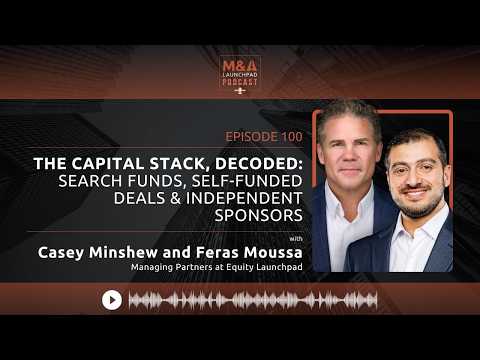
The Capital Stack, Decoded: Search Funds, Self-Funded Deals & More with Casey Minshew & Feras Moussa
Quick Comparison
| Deal setup | Best use case | Senior debt | Seller support | Sponsor cash | Sidecar role |
|---|---|---|---|---|---|
| SBA-heavy + sidecar | Stable business with strong coverage | 80% | 10% standby seller note | 7% | Small gap filler at 3% |
| Seller note-enhanced | Tighter debt service case | 60% | 20% seller note | 5% | Larger gap filler at 15% |
| Rollover + sidecar | Bigger deal with seller staying involved | 55% | 10% rollover equity | 10% | Main outside equity source at 25% |
My read: the article shows that price alone doesn’t decide whether a deal works. The stack does. If debt is tight, the seller may need to carry paper. Understanding the process of securing SBA funding is essential when navigating these debt requirements. If the sponsor can’t cover the equity alone, a sidecar investor can step in. And if the seller still matters after close, rollover equity may make more sense than a full cash exit.
That’s the lens I’d use before getting into the full article.
Example 1: SBA-Heavy Stack with a Small Sidecar Equity Gap
Start with the simplest case: an acquisition where debt covers most of the purchase price where debt covers most of the purchase price and the sidecar only plugs the small gap that's left. In this setup, the sponsor and sidecar investor don't need to bring a huge check to closing.
Sample Stack: SBA Debt, Sponsor Cash, Standby Seller Note, and Sidecar Check
In this hypothetical deal, the $3,200,000 purchase price is funded mostly with an SBA 7(a) loan. The loan covers 80% of the purchase price, which does most of the heavy lifting. A standby seller note fills the next layer, and the sponsor's cash plus a small sidecar check cover the rest. The seller note counts as equity under SBA rules only if it is on full 2-year standby.
| Component | Amount | % of Total | Classification |
|---|---|---|---|
| SBA 7(a) Loan | $2,560,000 | 80% | Senior Debt (10-year amortization) |
| Standby Seller Note | $320,000 | 10% | Counts Toward Equity Injection (2-year standby) |
| Sponsor Cash | $224,000 | 7% | Cash Equity Injection |
| Sidecar Equity | $96,000 | 3% | Cash Equity Injection (gap coverage) |
| Total | $3,200,000 | 100% |
The total equity injection across all sources comes to 20% of the purchase price.
That means the sidecar investor only needs to write a $96,000 check. Small, but it matters. It closes the remaining equity gap without making the sponsor put in more cash than needed at close. It also signals that another equity partner has looked at the deal and decided it makes sense.
SBA 7(a) acquisition loans are usually priced at Prime + 2.25% to 2.75%, amortize over 10 years, and often require a Debt Service Coverage Ratio (DSCR) of at least 1.25x. Anyone who owns 20% or more of the acquisition entity also needs to sign a personal guarantee.
Why This Structure Fits a Stable Business
This stack tends to fit a business with steady cash flow. When earnings are predictable, the lender can get comfortable that the debt will be repaid. At 80% financing, the lender is focused mainly on downside protection and repayment stability.
The sidecar check helps in a few direct ways:
- It preserves the sponsor's liquidity.
- It keeps too much of the sponsor's net worth from being tied up in one deal.
- It helps meet the SBA equity injection requirement.
If debt capacity gets tighter, seller support often has to do more of the work. The next example shows how that can look.
Example 2: Seller Note-Enhanced Stack for a Tighter Debt Service Case
This stack leans less on senior debt and more on seller support than Example 1. That matters when a business has tighter cash flow. If senior debt gets too heavy, repayment risk goes up fast. In that case, the seller note has to cover more of the gap, and the sidecar equity check usually needs to be larger to cover the rest.
Sample Stack: SBA or Bank Debt Plus a Subordinated Seller Note
In this example, the $2,000,000 purchase price is for a business that can't comfortably handle heavy senior leverage. Senior debt drops to 60% to keep coverage ratios in a healthy range. The seller note covers part of the shortfall, the sponsor puts in cash, and sidecar investors fund the remaining equity.
| Component | Amount | % of Total | Classification |
|---|---|---|---|
| Senior debt | $1,200,000 | 60% | Senior Debt |
| Seller Note (Subordinated) | $400,000 | 20% | Subordinated seller note; 2-year full standby |
| Sponsor Cash | $100,000 | 5% | Cash Equity Injection |
| Sidecar Equity | $300,000 | 15% | Cash Equity Injection |
| Total | $2,000,000 | 100% |
The sidecar check gets larger because senior debt capacity has a ceiling. It doesn't just plug a hole. It helps make the deal financeable when senior leverage is limited. A 2-year standby seller note also cuts near-term debt service and can help the stack pass lender coverage tests.
Why This Structure Fits Sellers Who Want to Support the Transition
When a seller carries a note, they're showing confidence in the business and giving the buyer more room during the handoff. That kind of alignment can matter a lot, especially if the buyer wants the seller to stay involved after closing.
On the flip side, a seller who won't carry any note may signal concern about how durable the business is.
If the seller wants more upside instead of delayed cash, rollover equity is the next lever.
Ready to Make Your Next Move?
Whether you're buying, selling, or investing — Clearly Acquired gives you the tools, data, and support to close with confidence.
Example 3: Rollover Equity and Sidecar Co-Investment in a Larger Deal
Use this structure when the seller wants liquidity, but not a full exit. If debt and a seller note still don't cover enough of the deal, rollover equity can cut down the outside equity check without pushing the seller into a full cash exit. Instead of taking all cash at close, the seller keeps a minority stake. Sidecar investors then cover the rest alongside the sponsor, which helps keep incentives lined up after closing.
Sample Stack: Senior Debt, Seller Rollover, Sponsor Cash, and Sidecar Equity
In this example, the $7,500,000 purchase price is too large for one sponsor to fund with equity alone. Senior conventional debt covers most of the deal. The seller rolls over a minority stake instead of cashing out in full, which cuts the equity gap. The seller keeps upside, and the sidecar fills the part the sponsor can't fund alone. The sponsor still puts in a meaningful check, and sidecar investors supply the balance.
| Component | Amount | % of Total | Classification |
|---|---|---|---|
| Senior Debt (Conventional) | $4,125,000 | 55% | Senior Debt |
| Seller Rollover Equity | $750,000 | 10% | Minority Equity Stake |
| Sponsor Cash | $750,000 | 10% | Cash Equity Injection |
| Sidecar Equity | $1,875,000 | 25% | Cash Equity Injection |
| Total | $7,500,000 | 100% |
At this size, conventional senior debt is the cleaner fit.
The rollover and sidecar checks solve two separate problems. The rollover cuts how much outside equity the deal needs. The sidecar fills the part the sponsor can't cover alone and shows lenders that the equity layer is committed before closing.
Here's how rollover equity stacks up against a full cash exit on the points that matter most to buyers, sellers, and lenders:
| Feature | Rollover Equity | Full Cash Exit |
|---|---|---|
| Control | Seller retains minority rights/protections | Buyer has 100% control post-close |
| Post-Close Incentives | Seller is motivated to help grow the business | Seller has no economic interest in success |
| Governance | May include a board seat or observer rights | No seller involvement in governance |
| Financing Implications | Reduces the cash equity required from the buyer | Requires higher debt or more outside equity |
Why This Structure Fits Transition-Sensitive Businesses
Rollover equity makes sense when the seller's role during the handoff still matters. If customer ties, employee trust, or operating know-how sit heavily with the seller, keeping them invested can smooth the transition. They still have skin in the game, so their support after closing has direct financial value.
That said, this only works if the minority terms are spelled out. Governance rights, approval rights, and seller protections should be in writing.
How Sidecar Checks Affect Capital Concentration and Closing Certainty
A larger sidecar check can lower sponsor capital concentration and improve funding certainty in competitive deals. The median equity check for a traditional search fund acquisition runs around $5,300,000, or about 40% of enterprise value.
| Equity Source | Typical Ownership % | Governance Role | Notes |
|---|---|---|---|
| Sponsor Cash | Majority of common equity | Lead operator; primary decision-maker | Highest "skin in the game" |
| Sidecar Equity | 10–40% | Passive / Board Observer | Fills the equity gap; keeps sponsor from over-concentrating capital |
| Seller Rollover | 5–10% | Minority stake; limited control | Continuity and alignment post-close |
More equity sources also mean more governance moving parts. Sidecar investors are usually passive, so their rights should be documented that way. The seller's minority stake may include observer rights or other specific protections. Those rights should be documented before signing.
Those tradeoffs shape the choice of stack.
How to Pick the Right Stack for the Deal
Across the three examples above, the right stack comes down to a few plain questions: How much debt can the business support? How flexible is the seller? How much cash can the sponsor put in? Is co-investment on the table? And after closing, does the seller still need a reason to stay tied to the outcome?
Decision Criteria: Debt Capacity, Seller Flexibility, and Equity Gap Size
Start with the lender. If the business fits SBA rules, an SBA-heavy stack usually keeps the equity need lower and the deal structure easier to manage.
If debt by itself won’t cover the purchase price, a seller note can bridge part of the gap without making the buyer give up as much ownership as outside equity would. That tradeoff matters. Seller notes often come with rates in the 3% to 10% range, while outside equity often looks for a 25% to 35% IRR.
Rollover equity makes sense when the seller needs to stay tied to the business during the handoff and when the gap left after debt is still too big for a seller note alone. Then sidecar capital steps in as the last piece, covering what’s left after debt, seller financing, and sponsor cash.
Side-by-Side Comparison of the Three Sample Stacks
Use the simplest stack that still works for debt service and seller expectations.
| Stack Type | Capital Sources | Complexity | Best Fit | Primary Advantage | Key Risk |
|---|---|---|---|---|---|
| SBA-Heavy + Sidecar | SBA debt, sponsor cash, standby seller note, sidecar equity | Low | Stable, cash-flowing businesses that fit within SBA limits | Maximizes leverage and minimizes equity required | SBA 7(a) cap and lender covenants |
| Seller Note-Enhanced | SBA or bank debt, subordinated seller note, sponsor cash, sidecar equity | Moderate | Deals where valuation exceeds debt capacity | Cheaper than outside equity and keeps the seller aligned | Seller note terms and standby period need careful negotiation |
| Rollover + Sidecar | Conventional senior debt, seller rollover equity, sponsor cash, sidecar equity | High | Deals where transition support from the seller still matters | Reduces outside equity needed and keeps the seller invested | More complexity and documentation |
In practice, sidecar equity is usually the last layer in the stack. It closes the gap without forcing the sponsor to put too much of their own money into one deal.
Where Clearly Acquired Fits in Capital Stack Design
That’s the exact issue Clearly Acquired helps with. Clearly Acquired structures acquisition capital stacks and matches sponsors with lenders and co-investors across SBA, bank, seller note, and outside equity capital.
FAQs
How do I choose between a seller note and rollover equity?
It depends on the deal’s capital stack and how control, risk, and flexibility are split up. SMB acquisitions often use a mix of senior debt, seller financing, and buyer equity. Some deals also bring in private credit, mezzanine financing, or equipment loans.
In plain English, a seller note can help hold the financing package together. And rollover equity can give the deal a bit more room when extra capital is needed.
When is sidecar equity better than more debt?
Sidecar equity can make sense when a searcher or independent sponsor needs to close a funding gap or bring in a partner for a larger deal. It adds a co-investor or sponsor check alongside the buyer’s equity and senior debt, without cutting down the main owner’s stake.
Clearly Acquired helps put these stacks together by blending SBA debt, seller notes, and outside equity to support both the close and post-close performance.
What rights do sidecar investors usually get?
Sidecar equity usually adds extra capital to cover funding gaps or help fund growth. In many deals, that money is co-invested alongside the main acquisition equity.
In a structure like a $2 million HVAC acquisition, sidecar-style support can show up as a performance-based seller note instead of an SBA-prohibited earnout. That setup ties the seller’s payout to post-close KPIs, which helps keep both sides aligned and lowers deal risk.
Related Reading
- Deal Structure Guide for Search Fund Business Buyers
- Search Fund Timeline Planning Guide
- How to Use SBA 7(a) Loans for Business Purchases
- Acquisition Financing: How to Get Prepared
- Mezzanine Debt Guide
Sources & Further Reading
Get verified and access deal flow
Join our verified investor network and explore the Catalyst Fund — cash-flowing, uncorrelated Main Street assets.
About the author
Principal & CEO/CIO
Samson Jagoras has 15+ years across finance, real estate, and business acquisitions. He began his career as a Futures & Commodities broker and later served as Chief Strategy Officer of an INC 500 marketing and technology firm, helping scale revenue from $1M to over $100M. Today he buys, builds, and advises a portfolio of companies with a focus on M&A, capital allocation, and operational strategy.