Plumbing Acquisitions: Who Holds Required Licenses?
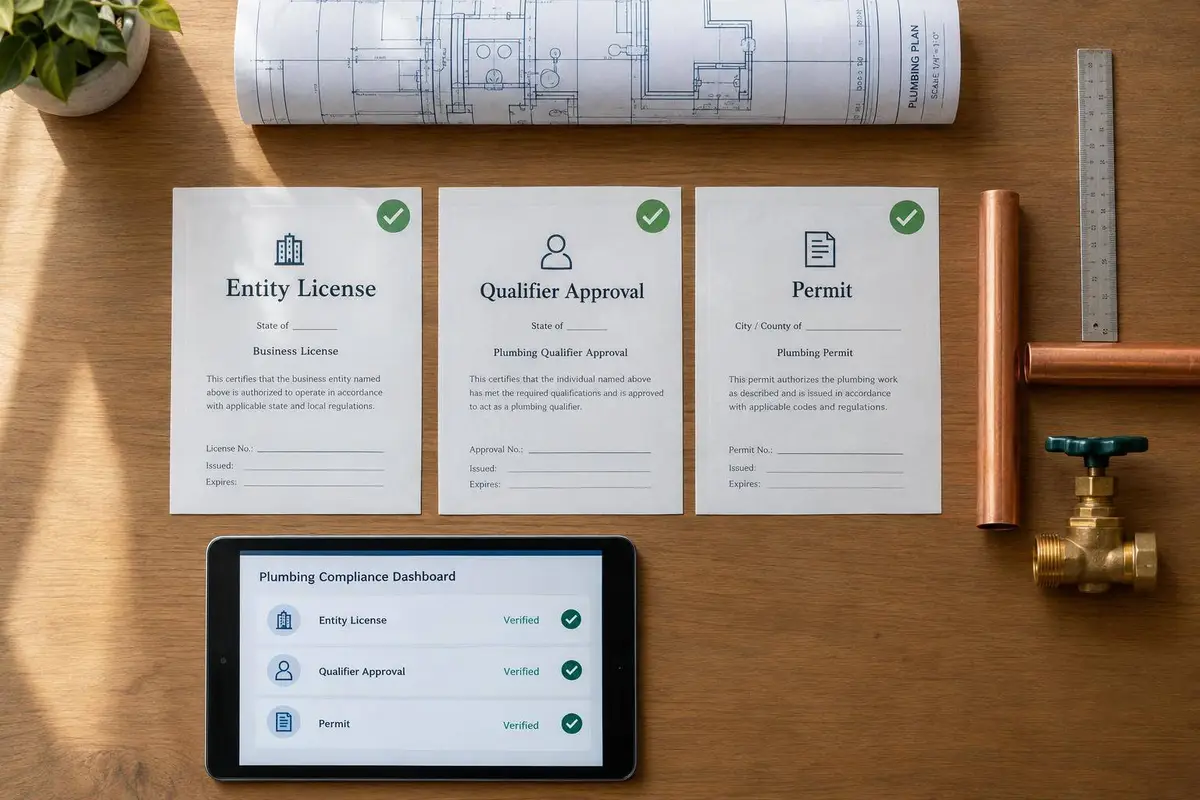
Verify entity licenses, qualifier approvals, permits, and licensed staff before closing a plumbing acquisition to ensure lawful operation.
 Samson JagorasPrincipal & CEO/CIONovember 23, 2026
Get matched with the right lender for your business
Compare offers from our vetted network. Pre-qualify in minutes — no impact to your credit.
Buying a plumbing business doesn’t give you the right to perform plumbing work. Before I would close, I’d verify that the buying entity, its qualifier, and its field staff have the approvals needed to serve customers on day one.
You can own the company without being a licensed plumber. But requirements vary by state and locality, and the seller’s license may not cover the business after closing.
I’d focus on four checks:
- License coverage: Verify entity licenses, worker credentials, local registrations, and any specialty approvals directly with issuing authorities.
- Seller departure: Confirm who will qualify and supervise the business after the seller leaves - and whether that person needs approval before closing.
- Deal filings: Check ownership-change rules, permit requirements, deadlines, and any lawful interim coverage.
- Price and protection: Forecast only work the business can legally perform, budget for replacement staff, and address licensing gaps in the purchase agreement.
My closing rule: <u>verify permission to operate before funding</u>. A transition agreement alone does not supply that permission.

Plumbing Acquisition Licensing: Four Checks Before Closing
How to Buy a Big Plumbing Business (as a Non-Plumber) | Peter deBaptiste Interview

sbb-itb-a3ef7c1
Who Must Hold Plumbing Licenses?
A buyer can own a plumbing company without being a licensed plumber. But the business still needs the required entity license and, where required, an approved qualifier.
What Does a Master Plumber’s License Allow?
A master plumber’s credential may allow the holder to perform plumbing work, supervise journeymen and apprentices, and serve as the business qualifier. The qualifier must have a relationship with the company that the jurisdiction recognizes and actively oversee the work. A license number alone isn’t enough.
Check that relationship and the supervision records. Review each worker’s credentials separately. Apprentices generally need supervision, while journeymen can work within the limits set by their jurisdiction. Other workers must also hold any credentials their jurisdiction requires.
Which Company Licenses and Local Approvals Are Required?
Confirm that the exact legal entity performing and contracting for work holds the required contractor license and has a designated qualifier. Check local trade registrations, business licenses, and project permits in every service territory.
Review specialty services separately. Backflow testing and some drain or sewer services, including jetting or trenchless replacement, may need extra certifications or license classifications.
Record each license or registration holder, number, jurisdiction, scope, and expiration date. Note whether an ownership change requires a new filing. Keep trade authorization separate from supporting requirements, such as insurance, bonds, workers’ compensation, tax registrations, and any premises-related approvals.
Don’t assume licenses transfer with the business. For every required license or registration, confirm whether it will cover the acquiring entity after closing or require a new application.
This check matters most when the seller or qualifier leaves at closing.
What Happens When Licensed Personnel Leave?
If the departing seller or employee is the required qualifier, check whether the buyer can legally serve customers, obtain permits, and finish open jobs after closing. A transition agreement does not automatically preserve operating authority. Confirm that the business can keep operating once the seller leaves.
Does the Deal Require New Licensing Approvals?
The deal’s structure determines which licensing filings, notices, or approvals may be needed. Even an equity deal can require filings or notice. Check with the licensing authority before setting the closing date, since approvals can affect the timeline. If new approval is needed, plan the replacement process before closing.
How Is a Replacement Qualifier Approved?
Confirm the replacement process directly with the licensing authority. Check the replacement’s qualifications, required supervision, notice and replacement deadlines, and approval steps. Also ask whether the business can keep bidding, obtaining permits, and working while approval is pending.
Make confirmed approval - and an approved replacement where required - a condition of closing, not a task to handle afterward.
How Can Buyers Retain Licensed Staff?
Identify everyone needed to maintain licensed coverage and assess what would happen if they left. Put the seller’s transition duties, supervision role, and handoff date in writing. A longer transition may give you time to recruit a replacement, but it does not establish compliance.
Check that any independent-contractor arrangement is allowed and provides the required supervision. Do not rely on a paper-only contractor arrangement. Require backup coverage at closing rather than leaving it for the transition.
How Should Buyers Verify and Underwrite Licensing Risk?
Use due diligence to confirm the business can keep operating after closing without relying on the seller’s licensing authority.
Which Licensing Records Should Buyers Check?
Check that every required license is active, correctly classified, and linked to the right entity, qualifier, and scope of work. Review each qualifier, expiration date, and local registration. Look beyond current certificates to disciplinary actions and unresolved licensing issues.
Review permit logs, bond and insurance records, and workers’ compensation coverage. Compare job records with permitted work categories to spot work performed without permits or outside the approved scope. Check personnel agreements and succession plans against actual staffing and payroll. Past noncompliance can lead to warranty claims and enforcement action.
Before using these findings in underwriting, confirm them directly with the issuing authorities.
Which Authorities Should Buyers Consult?
Check records directly with licensing boards and municipal permitting departments. Secretary of State filings confirm entity status - not plumbing authority. Keep dated verification records, and separately confirm licensing and lender requirements for the deal.
How Should Licensing Risk Affect Price and Deal Terms?
Forecast only lawful revenue, leaving out restricted or unapproved work. Price the business based on what it can legally do after closing.
| Licensing status | Effect on business activity | Buyer response | Potential deal protection |
|---|---|---|---|
| Active entity license and ownership-change compliance | Allows approved work to continue within the licensed scope | Check renewal dates and whether staffing provides enough backup | Require seller cure before closing; verify before funding |
| Seller is the qualifier | Revenue continuity depends on the seller’s approved role | Adjust earnings for the market cost of replacing the seller’s operating and qualifier roles, without double-counting payroll | Retention incentive or earnout tied to lawful performance |
| Replacement approval pending | Permit delays may limit service capacity and revenue | Exclude unsupported activity from the base forecast; test downside debt-service coverage and lender requirements | Require approval before funding; delay closing if needed |
| License expired or restricted | Affected work may be prohibited or limited | Remove affected revenue until authority is restored; account for corrective work and lower the purchase price | Seller renewal or cure, targeted indemnity, and escrow or holdback |
Address license status, disclosed violations, and past compliance in the purchase agreement. Negotiate targeted indemnities and escrows or holdbacks for identified liabilities, with release terms tied to documented resolution.
Conclusion: What Must Buyers Confirm Before Closing?
Before closing, verify every required license, approval of the post-close qualifier, licensed field staff, and all state or local approvals and filings needed to operate on day one.
Name someone to handle renewals, local registrations, and staffing-change notices before closing. Close only after the replacement qualifier is approved or the business has lawful interim coverage.
Clearly Acquired can help organize diligence, underwriting, and transition documents. It does not replace direct verification with licensing authorities or legal counsel.
FAQs
What happens to open permits after an acquisition?
Buyers should review all open permits and confirm with local authorities whether they can transfer. Plumbing licenses don’t automatically transfer with a sale. A stock sale may preserve licenses held by the business entity, but disclosures or approvals may still be required. An asset sale typically requires new applications.
If the seller is the primary master plumber, the business may not be able to operate legally after they leave unless a replacement is in place. Confirm that licensed staff will be available after closing to keep service running.
Can one master plumber qualify multiple locations?
Check whether one master plumber can cover every location. Verify the required licenses, named license holders, transfer or reissuance rules, and agency timelines - even in a stock deal.
If the departing owner holds the required master-plumber credentials, replacement coverage must be in place before closing. A gap can interrupt lawful service, delay funding and underwriting, and affect the price or deal terms. Escrow, firm closing deadlines, and seller transition support can help manage that risk.
How should qualifier replacement costs affect my offer?
Buyers usually want a replacement master plumber in place before closing. If licensing coverage is uncertain, they may discount the business’s valuation by 0.5x to 1.0x. When the departing owner holds the required credentials, a gap in coverage could leave the business operating illegally.
During due diligence, check whether the licenses belong to the business or an individual. Time the replacement to coincide with closing, and consider escrow holdbacks or seller assistance covenants to address licensing risks.
Related Reading
Find the right lender for your business
Whether it's working capital, an SBA loan, or acquisition financing — we'll match you with the right capital partner.
About the author
Principal & CEO/CIO
Samson Jagoras has 15+ years across finance, real estate, and business acquisitions. He began his career as a Futures & Commodities broker and later served as Chief Strategy Officer of an INC 500 marketing and technology firm, helping scale revenue from $1M to over $100M. Today he buys, builds, and advises a portfolio of companies with a focus on M&A, capital allocation, and operational strategy.