Cloud Scalability for M&A Success
Explore how cloud scalability enhances M&A success by streamlining integration, reducing costs, and fostering long-term growth.
 Samson JagorasPrincipal & CEO/CIOOctober 1, 2025

Cloud scalability is transforming mergers and acquisitions (M&A) by enabling businesses to integrate IT systems faster, manage unpredictable workloads, and reduce costs. Here's how it works:
- Dynamic IT Resources: Instantly scale storage, processing power, and networking to meet demand without large upfront investments.
- Cost Savings: Pay-as-you-go models cut IT costs by 20–30%, saving up to $1 million annually.
- Streamlined Integration: Cloud platforms simplify merging IT systems, reducing downtime and ensuring smoother transitions.
- Enhanced Security: Centralized management protects sensitive data and ensures compliance with regulations.
- Flexibility: Handle resource spikes during due diligence or integration, and support growth with minimal infrastructure.
Cloud solutions like IaaS, SaaS, and PaaS offer tailored tools for every M&A phase, from due diligence to post-merger growth. Companies leveraging these technologies report faster integrations and long-term efficiency gains. By adopting scalable cloud platforms, businesses can not only simplify M&A processes but also position themselves for sustainable growth in a digital-first economy.
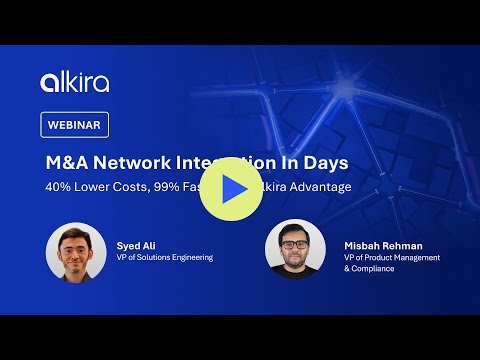
M&A Network Integration in Days: 40% Lower Costs, 99% Faster | Alkira Webinar
Benefits of Cloud Scalability for M&A Success
Cloud scalability is reshaping how businesses handle mergers and acquisitions (M&A), offering clear advantages that go far beyond cutting costs. It opens the door to strategic possibilities that traditional IT setups simply can't match. Let’s dive into how cloud scalability supports smooth integration and delivers long-term value.
Smooth IT Integration
Merging IT systems can be a logistical nightmare, but cloud scalability simplifies the process. By shifting workloads to a single, centralized cloud platform, companies can unify applications, databases, and workflows without the headache of compatibility issues. During the transition, cloud platforms allow legacy systems to run alongside new ones, ensuring operations continue without major disruptions. This approach minimizes downtime and helps both organizations stay productive throughout the integration process.
Cost Efficiency and Resource Optimization
The financial upside of cloud scalability during M&A is significant. Companies moving to the cloud have seen IT costs drop by 20–30%. On top of that, cloud integration solutions can save businesses up to $1 million annually by cutting redundant IT expenses and taking advantage of cost-saving options like tiered pricing, Reserved Instances, and Savings Plans .
Cloud scalability also shifts IT expenses from CapEx (capital expenditures) to OpEx (operational expenditures), thanks to its pay-as-you-go model . This eliminates the need for large upfront investments. Merging companies can reduce costs further by consolidating data centers and eliminating duplicate systems .
To keep costs in check over time, FinOps tools play a key role. These tools help businesses monitor usage, identify inefficiencies, and automate resource adjustments. This is especially important because the drive to achieve cost savings often slows down 18–24 months after the deal closes.
Better Security and Compliance
Security is critical during M&A, as sensitive data - like financial records and customer information - needs to be shared and protected. Cloud platforms offer enterprise-grade security features that many companies would struggle to implement on their own. Centralized security management ensures consistent policies across the board, including unified access controls, encryption, and monitoring through cloud-based tools.
Compliance is another area where cloud platforms shine. They simplify regulatory requirements by automating audit trails and managing data residency. In addition, the shared responsibility model means cloud providers handle infrastructure updates and patches, easing the burden on internal IT teams during the high-stakes integration phase.
Flexibility for Changing Business Needs
M&A often brings unpredictable demands, and traditional IT systems can struggle to keep up. Cloud scalability provides the flexibility to handle resource spikes without over-provisioning. For example, during due diligence and integration, computing needs can surge as teams process data and migrate systems. The cloud can scale up instantly to meet these demands and scale back down when things stabilize .
Geographic expansion, another common aspect of M&A, is also easier with the cloud. There’s no need to build physical data centers - teams can access applications and data from anywhere, enabling seamless remote collaboration. This flexibility also supports experimentation, allowing integration teams to test scenarios without disrupting production systems.
Technology Tools for Post-Merger Growth
Cloud solutions aren’t just about integration - they’re a springboard for growth. Advanced tools like artificial intelligence, machine learning, and analytics are readily available on cloud platforms, helping companies unlock new opportunities. Businesses that adopt cloud technologies report an average 40% boost in productivity. AI-driven analytics, for instance, can uncover synergies, optimize operations, and guide data-driven decisions by analyzing combined datasets.
Collaboration tools in the cloud make it easier for merged teams to communicate and manage projects, eliminating the hassle of juggling incompatible systems. Automation features further streamline tasks like data backups and system monitoring, freeing up IT teams to focus on strategic goals. Additionally, cloud marketplaces offer pre-integrated applications, speeding up the deployment of new solutions and ensuring a smoother post-merger transition.
Cloud Models and Tools for M&A Integration
When it comes to merging businesses, leveraging cloud technology can make the process smoother and more efficient. This section dives into the cloud models and tools that help streamline M&A integration, focusing on options that align with your specific needs and timelines.
Key Cloud Service Models
Infrastructure-as-a-Service (IaaS) provides unparalleled control over your IT environment during M&A integration. With virtualized servers, storage, and networking that scale instantly, IaaS eliminates the need for physical hardware. This is especially helpful when consolidating IT environments or migrating complex legacy systems from acquired companies.
IaaS lets companies quickly set up scalable infrastructure and merge data centers without large upfront costs. Its ability to scale resources up or down as needed is critical for handling the unpredictable demands of post-merger operations. This flexibility makes it a go-to option for the consolidation phase when IT environments need seamless integration.
Software-as-a-Service (SaaS) simplifies and speeds up the integration process with ready-to-use applications. Instead of spending months trying to connect disparate HR, CRM, or ERP systems, SaaS solutions offer standardized platforms that both companies can adopt right away. This approach lightens the IT workload and ensures that essential business functions stay operational during the integration process.
SaaS tools also shine during due diligence, offering virtual data rooms and AI-powered analytics to speed up contract reviews and risk assessments. This makes SaaS a great choice for standardizing processes across merged organizations quickly and efficiently.
Platform-as-a-Service (PaaS) bridges the gap between IaaS and SaaS, offering a complete development environment for creating custom integration solutions. Whether you need unique data pipelines or APIs to link different systems, PaaS provides the tools without requiring heavy infrastructure management. It’s particularly useful for building cloud-native applications that support new business models after the merger, making it ideal for organizations with specific integration challenges.
Essential Cloud Tools for M&A
Discovery and assessment tools are indispensable for understanding the IT landscape of the companies involved. For example, AWS Application Discovery Service gathers data on configurations, usage, and server behavior from target IT environments. It maps application dependencies and network infrastructure, giving integration teams a clear picture of the IT estate.
"Effective and complete workload and application data collection gives integration teams a portfolio-focused view of the target IT estate's applications, infrastructure, and services. This data is used to make instrumental determinations on M&A integration strategy."
M&A work management platforms streamline the integration process by centralizing all tasks and dependencies. Platforms like Midaxo guide teams through the entire M&A lifecycle, from deal sourcing to post-merger integration. While these tools can be expensive, they provide unparalleled visibility and efficiency for managing complex IT projects.
Secure document management is critical during M&A, especially for protecting sensitive information. Virtual Data Rooms like Intralinks and Datasite offer secure platforms for sharing IT documentation during due diligence and integration. These solutions provide enterprise-grade security that’s often beyond the capabilities of in-house systems.
Cloud-based integration platforms simplify the task of connecting different systems. With pre-built connectors and templates, these tools enable seamless data sharing and collaboration across merged entities. They’re particularly useful in hybrid cloud setups where legacy systems need to work alongside modern applications.
AI-driven analytics tools are changing the game for M&A integration. For instance, Grata, an AI-powered deal-sourcing platform, helped one firm identify prospects for over 15 projects that might have otherwise been overlooked. Tools like these bring speed and precision to the integration process.
Comparison of Cloud Models in M&A
Here’s a breakdown of how each cloud model supports different phases of M&A and practical recommendations for their use:
| Cloud Model | M&A Phase Support | Practical Recommendations |
|---|---|---|
| IaaS | Due Diligence: Assess infrastructure for security, compliance, and costs Integration: Quickly provision scalable infrastructure, migrate workloads, consolidate data centers Post-Merger Growth: Scale resources to meet new demands |
Best for high control needs, migrating legacy systems, or consolidating diverse IT environments. Use for foundational IT integration and flexible resource management |
| PaaS | Integration: Build custom applications, APIs, and data pipelines without managing infrastructure Post-Merger Growth: Develop cloud-native applications to support new business strategies |
Ideal for creating tailored solutions to address unique integration challenges or enabling digital transformation post-merger |
| SaaS | Due Diligence: Secure document sharing, collaboration, and AI-powered risk assessment Integration: Standardize processes with ready-made applications Post-Merger Growth: Improve operational efficiency with advanced analytics |
Best for streamlining business functions, improving collaboration, and reducing IT management overhead. Look for solutions with strong APIs |
For more complex integrations, especially those involving multiple platforms or on-premises systems, consider engaging professional services from cloud providers.
On average, companies use around 275 SaaS applications, spending approximately $4,830 per employee annually. While this offers opportunities for streamlining during M&A, it also highlights the risk of overspending - 27% of cloud costs are typically wasted. Smart planning and the right tools can help you maximize value while minimizing waste.
sbb-itb-a3ef7c1
Steps to Implement Cloud Scalability in M&A
Implementing cloud scalability during an M&A transaction requires a careful, step-by-step approach. Success hinges on balancing speed with thorough planning to ensure smooth integration and prepare the combined organization for future growth.
Evaluate Current IT Infrastructure
Before diving into migration, take a close look at your existing IT setup. Surprisingly, only 25% of CEOs conduct technology due diligence in most deals, even though 74% see technology as a key driver of growth. This oversight can be costly, as 96% of CIOs report that tech due diligence often reveals critical issues or opportunities that significantly impact the deal.
Start by outlining the scope and goals of your evaluation. Understand how technology supports each company's operations, and focus on key areas like scalability limits, intellectual property, and cybersecurity risks. This effort should align with your post-acquisition strategy.
Take inventory of both physical and cloud-based assets. For physical systems, consider server capacity, network bandwidth, storage, and data centers. For cloud environments, assess hosting costs, scalability, and risks like vendor lock-in. Check your tech stack for outdated systems, identify technical debt, and evaluate performance metrics like uptime and response times to manage risks effectively.
Security is a critical part of this evaluation. Scrutinize access controls, encryption protocols, and incident response plans. Look for vulnerabilities like unpatched software, weak firewalls, or unencrypted sensitive data. Non-compliance with regulations such as GDPR can lead to hefty fines - up to $20 million in some cases.
| Regulation | Key Requirements | Penalty Risk |
|---|---|---|
| GDPR | Consent management, data mapping | Up to 4% revenue |
| HIPAA | Security controls, breach reporting | Criminal charges possible |
| CCPA | Privacy notices, deletion processes | $7,500 per violation |
Cost analysis is also essential. Cloud platforms like AWS can cut infrastructure costs by 20–40% compared to on-premises setups. Review ongoing maintenance expenses, upgrade costs, and operational efficiencies. Post-M&A, organizations often reduce vendor counts by 30–50%, leading to better contracts and savings.
Once you've mapped out your IT capabilities and vulnerabilities, you're ready to prioritize workloads for migration.
Prioritize Workloads for Migration
Effective workload prioritization is key to avoiding chaos during the migration process. Ideally, this planning should start during due diligence, even before the M&A deal is finalized. Early identification of dependencies and migration sequences can save time and reduce risks.
Group applications, servers, and resources that are interdependent to ensure they move together. Prioritize workloads based on their risk level, business importance, and compliance requirements. Start with low-risk, simpler workloads in pilot migrations to refine your process before handling critical systems.
Use the "7 Rs framework" to determine the right migration strategy for each workload: Relocate, Rehost, Replatform, Refactor, Repurchase, Retire, or Retain. Clean up your systems by removing outdated or unused components before migration.
Once priorities are set, the next step is selecting the right cloud providers and services.
Select Cloud Providers and Services
Choosing the right cloud providers is a balancing act between technical capabilities, costs, and alignment with your M&A goals.
Evaluate providers based on factors like geographic coverage, compliance certifications, security features, and cost structures. Public cloud providers often come with mature data management practices and security tools that meet major regulatory requirements like GDPR and CCPA, which can streamline the diligence process.
Keep in mind that expertise in one cloud environment (e.g., AWS) doesn’t guarantee expertise in another (e.g., Azure). Security tools may also vary across providers, so ensure they meet your needs.
Look beyond initial migration costs. Assess long-term operational expenses, data transfer fees, and savings from license consolidation. Review vendor contracts for flexibility, paying close attention to Service Level Agreements and hidden costs. If needed, plan for multi-cloud or hybrid setups to maximize benefits while retaining certain on-premises resources.
Selecting providers that align with your M&A strategy ensures cloud scalability supports seamless integration across the combined organization.
Develop a Migration and Integration Plan
A detailed migration plan is critical to turning assessments into tangible outcomes. Poor planning is a leading cause of M&A deal failures.
Define clear objectives and measurable success metrics, such as cost savings or performance improvements, for each phase of the migration. Break the process into manageable waves based on dependency mapping. Start with critical applications and test each phase thoroughly before moving forward.
Security should be a top priority during migration. Use strong access controls and encryption for data in transit and at rest. Minimize the time sensitive data remains unencrypted by decrypting only when necessary and re-encrypting promptly within secure environments.
Develop robust testing procedures, including functional validation, performance checks, security assessments, and disaster recovery drills. Address identity management and user experience by planning for UPN mapping, clear communication, and cutover schedules. Provide adequate training for new platforms to ensure a smooth transition.
Set realistic timelines that account for testing and approvals, and include contingency plans. With 84% of cloud migrations exceeding budgets or timelines, it’s better to plan for potential setbacks.
Before migration, clean and back up your data. Complete any necessary system upgrades to avoid compatibility issues down the line.
Monitor and Optimize Post-Merger
Cloud migration doesn’t end with deployment. Continuous monitoring and optimization are vital to achieving long-term benefits and adapting to changing business needs.
Establish baseline metrics for key performance indicators and implement real-time monitoring tools to track your cloud environment. Maintain a detailed inventory of cloud resources and their connections. Regularly review access permissions to eliminate redundancies or overprovisioning.
Ready to Make Your Next Move?
Whether you're buying, selling, or investing — Clearly Acquired gives you the tools, data, and support to close with confidence.
Long-Term Value Creation with Cloud Scalability
Cloud scalability has reshaped mergers and acquisitions (M&A), offering a pathway to sustained growth through flexible and resilient IT systems. While a staggering 70% to 90% of M&A deals fail to meet expectations, businesses that embrace cloud technologies can build operations that adapt to shifting markets and growth opportunities. This section explores how cloud scalability not only simplifies integration but also lays the groundwork for long-term, strategic growth.
The transition from traditional IT infrastructure to cloud-based systems revolutionizes how merged companies operate. Instead of being tied to costly hardware and lengthy upgrade timelines, organizations gain the agility to respond to market demands, integrate acquisitions seamlessly, and adopt emerging technologies with ease.
Enabling Quick Expansion
Cloud scalability eliminates many of the hurdles that often slow down business growth after a merger. Whether it's integrating new business units, opening additional locations, or preparing for future acquisitions, cloud infrastructure provides the necessary resources instantly - no months-long hardware procurement or installation required.
This adaptability is especially beneficial for smaller businesses, such as regional retailers. For example, a retailer can unify operations across multiple locations in just weeks by using cloud-based point-of-sale (POS) and inventory systems.
The operational expenditure (OpEx) model of cloud computing also makes growth more financially manageable. Instead of sinking large sums into hardware that might sit idle, businesses can scale resources up or down based on actual needs, paying only for what they use. This flexibility reduces financial risk while enabling companies to seize growth opportunities without worrying about underutilized assets.
Cloud platforms further support expansion by enabling global collaboration right from the start. Teams from merged companies can access shared tools, data, and applications regardless of location, which is invaluable for businesses entering new markets or managing distributed operations.
For companies pursuing multiple acquisitions, cloud infrastructure creates a standardized platform that simplifies future integrations, saving both time and money.
Driving Continuous Advancement
Beyond the initial integration phase, cloud platforms open the door to ongoing innovation. They provide access to advanced tools and technologies that might otherwise be out of reach, leveling the playing field for smaller businesses competing with larger enterprises. Features like artificial intelligence (AI), machine learning, and real-time analytics become readily available.
For example, AI and machine learning tools built into cloud platforms can automate tasks like data harmonization across merged entities, identify operational efficiencies, and optimize processes - all without requiring in-house technical expertise. A manufacturing firm acquiring a competitor, for instance, could use cloud-based predictive maintenance to minimize downtime and cut costs while improving efficiency.
Real-time analytics dashboards offer a unified view of merged operations, helping decision-makers identify trends, address bottlenecks, and uncover opportunities for improvement.
Additionally, cloud providers continuously update their platforms with new features and services. Merged companies can adopt these upgrades immediately, staying ahead of industry changes without enduring lengthy internal evaluations.
Cloud platforms also encourage experimentation. Businesses can test new strategies, models, or technologies in a low-risk environment, scaling successful initiatives and quickly pivoting away from those that don’t deliver results.
Cost Optimization and Operational Resilience
The benefits of cloud scalability go far beyond the initial integration process. With dynamic resource allocation, merged companies can optimize costs while maintaining resilience during periods of rapid growth or market volatility.
Traditional IT setups often require provisioning for peak demand, leading to wasted resources during quieter times. Cloud scalability, on the other hand, adjusts resources automatically based on usage. For instance, an e-commerce company can handle holiday traffic surges without maintaining expensive servers year-round, while a B2B services firm can scale down during slower periods to conserve cash flow.
The pay-as-you-go model also shifts IT spending from unpredictable capital expenses to manageable operating costs, improving financial planning and freeing up funds for growth initiatives.
Operational resilience is another key advantage. Cloud platforms come with built-in redundancy and disaster recovery features, eliminating the need for costly backup systems. This ensures business continuity, which is especially critical for smaller organizations with limited resources. For example, during the COVID-19 pandemic, companies with cloud-based systems quickly transitioned to remote work and adapted their service models, while those reliant on on-premises systems faced significant challenges.
For small and mid-sized businesses, Clearly Acquired offers a comprehensive suite of AI-driven tools and advisory services to maximize the benefits of cloud scalability. By combining deal sourcing, financing, and post-merger integration support, Clearly Acquired ensures that cloud investments align with strategic goals and deliver measurable results.
The cumulative advantages of cloud scalability extend well beyond the M&A process. Companies that adopt these strategies not only achieve smoother integrations but also position themselves for sustained growth, innovation, and leadership in today’s digital-first economy.
Conclusion: Cloud Scalability as a Catalyst for M&A Success
Cloud scalability has transformed the M&A process, moving beyond a simple tech upgrade to become a critical driver of deal success. Historically, 70% of M&A deals fail to deliver expected value due to poor integration. However, companies leveraging scalable cloud solutions are changing that narrative, achieving better outcomes across every phase of the M&A lifecycle. These tools are enabling faster decision-making, smoother integrations, and more strategic growth.
The numbers speak for themselves: businesses report a 25% reduction in IT costs and up to 40% savings on overall infrastructure expenses. Moreover, 92% of executives view cloud technology as essential to achieving success, with 80% identifying cloud integration as the backbone of effective M&A execution. Beyond cost savings, cloud analytics have accelerated decision-making by 30% and cut due diligence timelines by 25%. Post-merger success stories, like Dell's 40% boost in cloud-related services revenue within two years of acquiring EMC, further highlight the transformative potential of cloud scalability.
"Strategic M&A is a catalyst for growth. It emphasizes frequent, smaller acquisitions that drive continuous innovation."
Cloud scalability also provides operational resilience, proving invaluable during times of market disruption. A prime example is the Federal Home Loan Bank's rapid scaling of operations in 2023, which ensured business continuity overnight. For companies pursuing multiple acquisitions - a strategy linked to doubling growth rates - cloud platforms simplify integration with standardized frameworks, reducing both complexity and costs. This shift allows M&A to evolve from a disruptive process into a streamlined growth engine.
The intersection of AI and cloud technology is further revolutionizing M&A execution. Generative AI, for instance, now enables automated contract analysis during due diligence, quickly identifying risks and compliance issues across thousands of documents. As Andy Jassy, CEO of Amazon, highlighted, "The artificial intelligence portion of AWS is in the billions of dollars in annualized revenue, more than doubling year over year", demonstrating the growing importance of cloud-native AI in driving business value. These innovations are setting new benchmarks for integration, making scalable cloud infrastructures central to the future of M&A.
Looking ahead, the value of cloud-based systems is projected to reach $832 billion by 2025. This underscores how scalable cloud solutions not only streamline current processes but also fuel long-term strategic growth. Companies investing in these technologies today are positioning themselves for seamless integrations and a lasting competitive edge in an increasingly digital economy.
Cloud scalability has become more than just a tool - it’s the defining factor that separates successful M&A deals from the 70% that don’t meet expectations. It delivers the agility, efficiency, and innovation needed to thrive in today’s fast-paced business landscape.
FAQs
How does cloud scalability make mergers and acquisitions smoother and more efficient?
Cloud scalability plays a crucial role in simplifying mergers and acquisitions by allowing IT systems to be deployed quickly and enabling smooth data sharing. This makes integrating newly acquired businesses much more manageable. The ability to scale infrastructure as needed supports the growing demands of expanded operations, reducing complications and minimizing potential disruptions.
Additionally, the cloud supports phased integration, which helps ensure smoother transitions, faster onboarding of new teams or systems, and a quicker path to realizing the benefits of the acquisition. This adaptability is essential for maintaining business continuity and fostering growth throughout the M&A process.
What are the security and compliance benefits of using cloud platforms during M&A transactions?
Cloud platforms offer strong security and compliance benefits, making them an invaluable tool during M&A transactions. They provide advanced encryption, strict access controls, and real-time monitoring to help keep sensitive data secure at every stage of the process.
On top of that, they streamline compliance efforts by automating tasks such as monitoring, reporting, and risk assessments. These features help ensure alignment with data protection laws and industry standards, minimizing the risk of breaches. This added layer of protection not only safeguards your business but also helps facilitate smoother post-merger integration.
What are the best ways to manage costs when using cloud scalability for mergers and acquisitions?
When navigating the complexities of mergers and acquisitions, managing cloud-related costs becomes a critical task. To keep expenses under control while taking advantage of cloud scalability, companies should prioritize cloud cost optimization.
The first step is to identify and eliminate any unused or underutilized resources. Next, adjust infrastructure to align with actual business needs - a process often referred to as rightsizing. Automating repetitive processes can also drive ongoing efficiency, saving both time and money.
Another key strategy is creating a unified cloud plan and implementing migrations in carefully planned phases. This approach helps balance costs while ensuring performance and scalability remain intact. Additionally, leveraging cloud management tools can provide detailed insights into spending, making it easier to avoid unnecessary expenses and maintain financial predictability.
By following these practices, businesses can better achieve cost efficiency, streamline integration, and support growth throughout the M&A process.
Related Reading
About the author
Principal & CEO/CIO
Samson Jagoras has 15+ years across finance, real estate, and business acquisitions. He began his career as a Futures & Commodities broker and later served as Chief Strategy Officer of an INC 500 marketing and technology firm, helping scale revenue from $1M to over $100M. Today he buys, builds, and advises a portfolio of companies with a focus on M&A, capital allocation, and operational strategy.