Business Broker Fee Structures Explained
Business broker fees are how brokers get paid for helping buy or sell businesses, typically in the $1 million to $10 million range. Here's a quick breakdown of the main fee types:

Business broker fees are how brokers get paid for helping buy or sell businesses, typically in the $1 million to $10 million range. Here's a quick breakdown of the main fee types:
- Commission: A percentage of the sale price, common for deals over $1M. Aligns broker incentives with the deal's success.
- Fixed Fee: A set upfront cost, often used for smaller transactions. Offers predictable pricing.
- Retainer: Paid upfront and credited later, used for complex deals to secure the broker's commitment.
- Hybrid: Combines elements of various fee models for flexibility.
Quick Comparison
| Fee Type | Best For | Key Benefit |
|---|---|---|
| Commission | Deals over $1M | Payment tied to success |
| Fixed Fee | Smaller transactions | Predictable costs |
| Retainer | Complex transactions | Ensures broker focus |
| Hybrid | Custom situations | Flexible and tailored |
To choose the right fee structure, consider the deal's size, complexity, and the services offered by the broker. Tools like Clearly Acquired can simplify fee management by organizing agreements, monitoring milestones, and streamlining communication.
How Much Do Business Brokers Charge? Fees & Commission ...

Common Fee Structures
In the U.S., business brokers typically use three main fee models, tailored to the size and complexity of the deal. These models help align services with client needs.
Commission Fees
This is the most widely used model. Brokers charge a percentage of the final sale price, which ties their earnings directly to the success of the deal [1].
Fixed Fees
For smaller transactions, often under $1 million, brokers may charge a set, upfront fee. This provides clear cost expectations and limits expenses.
Retainer Fees
Retainers involve an upfront payment that’s credited toward the final fee. This covers early-stage tasks like marketing and due diligence while ensuring the broker is fully engaged.
Up next: a side-by-side comparison of these models in a detailed fee analysis matrix.
Fee Structure Analysis
When considering fee models, it's important to match your selection to the deal's size and level of complexity. Here are some key steps to evaluate broker fee proposals effectively:
- Assess the broker's experience with similar transactions to ensure they bring relevant expertise.
- Understand the details of their services, payment schedule, and critical milestones.
- Check for transparency in both fees and incentives to avoid surprises later.
To make things clearer, compare these models based on cost, alignment of incentives, and the range of services offered in the table below.
Fee Structure Variables
Understanding the factors that shape business broker fees can help sellers make smarter choices about their representation. Several elements play a role in how brokers determine their compensation.
Deal Size and Complexity
For smaller deals, brokers often charge a higher percentage fee. This helps cover fixed costs like marketing and compliance. On the other hand, larger transactions typically come with lower percentage rates. If a deal involves multiple entities or significant real estate components, brokers may charge more due to the added expertise and effort required.
Scope of Broker Services
The range of services a broker offers also impacts fees. Full-service brokers handle everything from marketing and reaching out to buyers to valuations, negotiations, and coordinating with legal and financial advisors. Tools like Clearly Acquired can streamline parts of the process, such as automating NDA deployment and managing deals, which may reduce the broker’s workload - and potentially their fees.
These factors set the stage for reviewing and negotiating fee agreements, which will be covered in the next section.
sbb-itb-a3ef7c1
Ready to Make Your Next Move?
Whether you're buying, selling, or investing — ClearlyAcquired gives you the tools, data, and support to close with confidence.
Get Started FreeFee Structure Management
Once you've reviewed the fee variables, follow these steps to effectively manage and align broker fees:
- Verify details on Clearly Acquired: This helps establish trust and makes fee negotiations smoother.
- Request full access to the data room: Ensure the fee schedules align with the deal's scope and complexity.
Clearly Acquired Platform Features
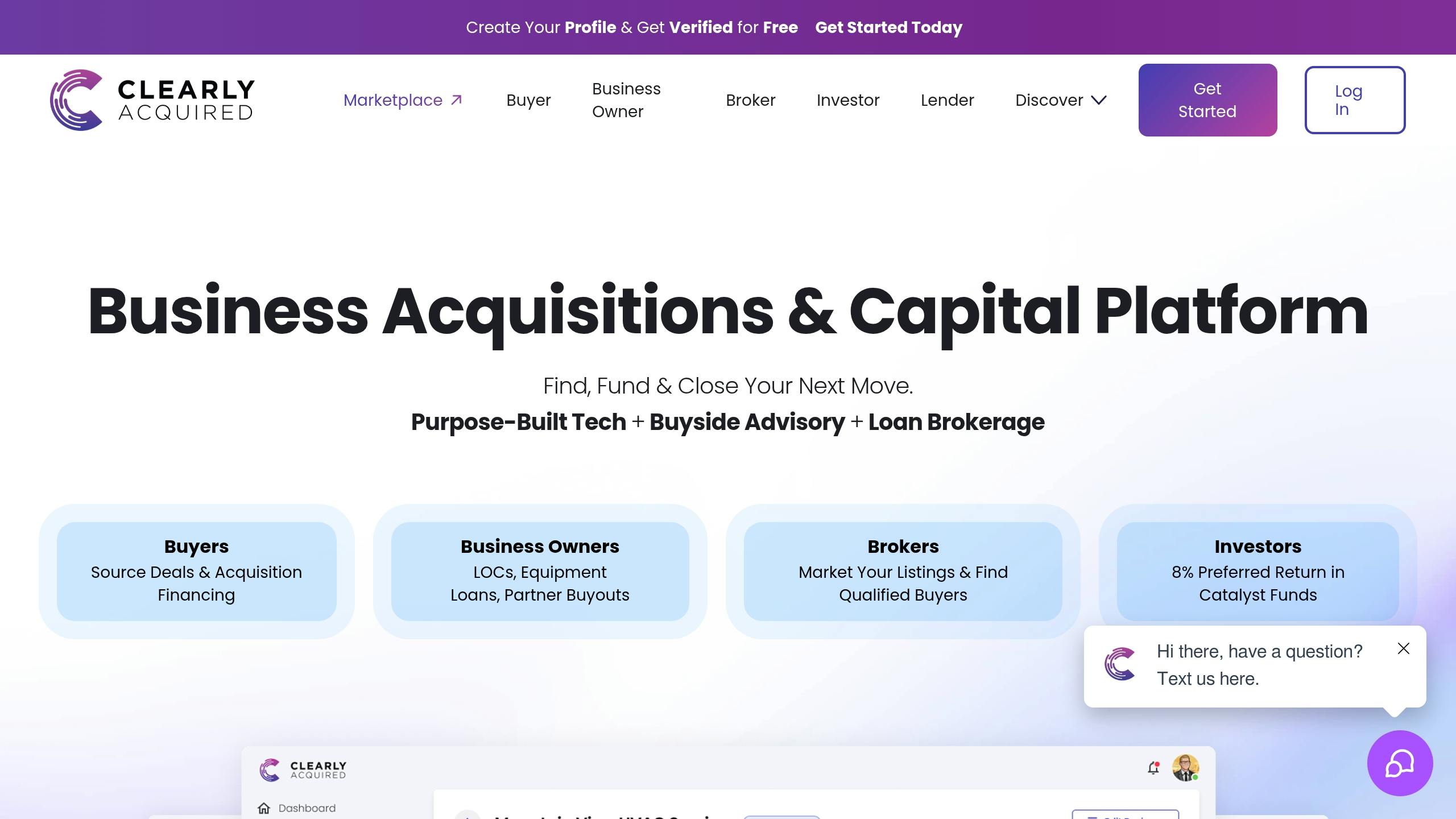
Clearly Acquired simplifies broker fee management and handles $6.5 million in monthly transactions [1].
Let’s break down how its tools help maintain fee agreements and make fee management easier.
Deal Management Tools
Keep all fee agreements organized in one place with tools like:
- Data Room Access: Store and share fee schedules and agreements securely.
- Dashboards: Monitor fee milestones at a glance.
- Messaging: Negotiate fees directly within the platform.
Here’s an example of its impact: Kerianne Los, who owns a private training facility in Colorado, used Clearly Acquired to secure financing and complete transaction paperwork in just two weeks [1].
Learning Resources
Clearly Acquired offers resources to help users understand and improve fee structures:
- Business Acquisition Course: Step-by-step modules on fee negotiation.
- Live Coaching: Real-time reviews of fee agreements.
- Advisory Network: Connect with over 125 experts on fee structures [1].
Efficiency Tools
Speed up workflows with tools designed for smooth transactions:
- Verification: Confirm the credentials of brokers and buyers.
- Advanced Search: Find deals based on specific fee structures.
- Deal Room: Review documents securely and efficiently.
Summary
This guide has covered fee models, the factors influencing them, and ways to manage them effectively. Here's a quick recap of the key points.
Key Takeaways
- Match your fee models to the specific goals of each deal, keeping incentives clear and transparent.
- Leverage Clearly Acquired's tools for secure document handling and efficient communication.
- Enhance your fee negotiation skills using targeted learning materials.
Tips for Building Strong Broker Relationships
- Store and protect all documents in the platform's deal room for easy access.
- Use the integrated chat feature to keep communication open and verifiable.
- Broaden your knowledge with on-demand courses focused on acquisitions.
FAQs
What is the best way to choose the right business broker fee structure for my transaction?
Choosing the right business broker fee structure depends on your specific transaction goals, the complexity of the deal, and the services you need. Common fee structures include commission-based fees, flat fees, and retainers, each suited to different scenarios. For example, commission-based fees are often tied to the sale price, while flat fees or retainers may work better for smaller or more straightforward transactions.
It's also important to evaluate the broker's experience and track record. Platforms like Clearly Acquired can connect you with trusted brokers and provide tools to streamline the acquisition process, helping you make informed decisions about fee structures and ensuring your transaction runs smoothly.