10 Common SBA Loan Mistakes and How to Avoid Them
Applying for an SBA loan can be challenging, but avoiding common mistakes can greatly improve your chances of approval. Here are the top pitfalls to watch out for and how to sidestep them:
 Samson JagorasPrincipal & CEO/CIOMarch 13, 2026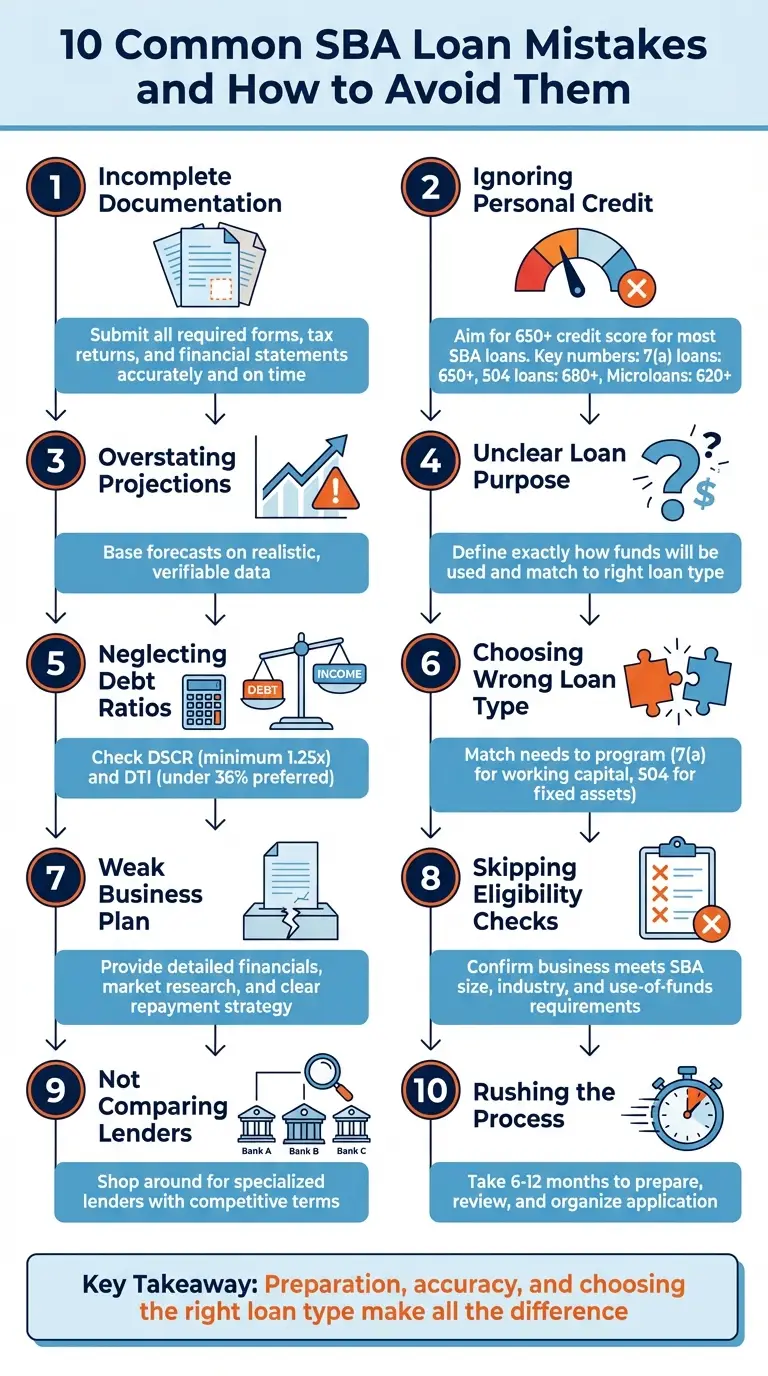
Get matched with the right lender for your business
Compare offers from our vetted network. Pre-qualify in minutes — no impact to your credit.
Applying for an SBA loan can be challenging, but avoiding common mistakes can greatly improve your chances of approval. Here are the top pitfalls to watch out for and how to sidestep them:
- Incomplete Documentation: Submit all required forms, tax returns, and financial statements accurately and on time.
- Ignoring Personal Credit: Lenders evaluate your personal credit score alongside business credit. Aim for a score of 650+ for most SBA loans.
- Overstating Projections: Base financial forecasts on realistic, verifiable data to avoid credibility issues.
- Unclear Loan Purpose: Clearly define how you’ll use the funds, such as using SBA 7(a) and 504 loans for equipment financing, and match your purpose to the right SBA loan type.
- Neglecting Debt Ratios: Check your Debt-Service Coverage Ratio (DSCR) and Debt-to-Income (DTI) ratio to ensure you meet lender benchmarks.
- Choosing the Wrong Loan Type: Match your funding needs with the appropriate SBA loan program by comparing SBA 7(a) loan terms vs. other financing options to find the best fit.
- Weak Business Plan: Provide detailed financials, market research, and a clear repayment strategy.
- Skipping Eligibility Checks: Confirm your business meets SBA size, industry, and use-of-funds requirements.
- Not Comparing Lenders: Shop around for lenders that specialize in your loan type and offer competitive terms.
- Rushing the Process: Take time to prepare, review, and organize your application to avoid delays or rejections.
Key takeaway: Preparation, accuracy, and choosing the right loan type and lender make all the difference. Address potential red flags early, and stay organized throughout the process to boost your chances of success.
10 Common SBA Loan Mistakes and How to Avoid Them
1. Incomplete or Disorganized Documentation
Accuracy and Completeness of Documentation
Submitting incomplete or poorly organized documentation could sabotage your SBA loan application. Since the SBA works with banks and credit unions to approve loans, lenders are meticulous about verifying every detail to ensure your business is a reliable credit risk. You'll need to provide key documents like SBA Form 1919, two to three years of business tax returns, and up-to-date financial statements, which include profit and loss reports, balance sheets, and cash flow projections.
Accuracy and consistency across all documents are critical. Even small discrepancies between your tax returns, profit and loss statements, and bank records can raise doubts about your application's credibility. For example, financial statements must align perfectly with your tax returns. Ezra Cabrera from SMB Compass emphasizes:
"SBA approval looks past basic eligibility. Lenders evaluate risk, consistency, and documentation to determine whether you are truly ready for long-term financing".
Submitting organized and consistent documentation on time further boosts your chances. Timing is just as crucial as accuracy. Financial statements must be current at the time of review, and delays in responding to underwriter requests can lead to reassessment, slowing the process. To streamline your application, store all materials in a centralized digital folder and arrange business acquisition and financial documents in chronological order, making it easier for underwriters to assess your business's progress.
Follow a step-by-step guide to securing SBA funding and consider having a CPA review your documents before submission. This step ensures your application is both thorough and well-structured, signaling to lenders that you're prepared and serious about securing financing.
sbb-itb-a3ef7c1
2. Underestimating Personal Credit Importance
Financial Preparedness and Creditworthiness
Your personal credit isn't just a side note in the SBA loan process - it's a key factor lenders use to evaluate your application.
Many business owners mistakenly believe that strong business credit alone will carry them through. The truth? Lenders pay close attention to personal credit too. Beth Deyo, a financial writer at Lendio, highlights this reality:
"Your personal credit history helps lenders evaluate risk, so that's typically one of the first things they'll look at."
Personal credit essentially reflects your financial "Character" - a measure of how responsibly you handle obligations. Lenders will scrutinize your credit history, payment patterns, and any warning signs like bankruptcies, tax liens, judgments, or frequent late payments.
Here’s a quick breakdown of credit score expectations for different SBA loan programs:
- SBA 7(a) loans: Typically require a score of 650 or higher.
- SBA 504 loans: Generally need a score around 680.
- SBA microloans: Usually require a score of 620 or higher.
While the SBA itself doesn’t enforce a strict minimum credit score, individual lenders often set their own standards based on the loan type.
To improve your chances of approval, take these steps before applying:
- Review your credit reports: Check for errors and dispute inaccuracies.
- Reduce personal debts: Lowering your debt-to-income ratio can boost your creditworthiness.
- Avoid new debt: Hold off on opening new credit lines or taking on additional loans.
Neglecting your personal credit can lead to delays, smaller loan offers, or outright rejection. Taking proactive measures can make all the difference.
Next, let’s dive into the risks of overstating financial projections.
10 SBA LOAN MISTAKES to AVOID (From Real SBA Lenders)

3. Overstating Financial Projections or Revenue
Submitting overly optimistic growth numbers without solid evidence can seriously hurt your loan application.
Beth Deyo, a financial writer at Lendio, emphasizes the risks:
"It's tempting to present big growth numbers, especially when you're excited about the direction your business is headed. But if your projections aren't based on verifiable data or market trends, they can raise red flags."
Lenders will compare your projections with your historical financial records. If they find inconsistencies, it can damage your credibility. A common issue arises when business owners reduce taxable income to lower their tax bill but then submit loan applications with inflated revenue estimates. The Business Funding Group highlights this challenge:
"While it's natural to minimize tax payments, remember that your taxable income is a key factor lenders use to calculate your Debt Service Coverage Ratio (DSCR). Lower reported income will negatively impact your loan approval."
The solution? Ground your projections in reliable data. Conduct thorough market research, clearly outline your assumptions, and make sure your forecasts align with your actual cash flow. This shows lenders you can handle the loan payments. To avoid errors, have an accountant review your projections to ensure they match your tax returns and SBA loan closing documents.
Next, we’ll dive into the risks of not defining a clear loan purpose.
4. Lack of Clear Loan Purpose
Once your financial projections are solid, the next step is to clearly define how you'll use the loan. Simply stating you need funds for "business expenses" won't cut it. SBA lenders expect a detailed breakdown of how the money will be spent and how it will contribute to your business's growth or stability. Vague or inconsistent explanations can raise concerns and jeopardize your chances of approval.
Beth Deyo from Lendio puts it this way:
"SBA lenders want to know exactly where the money is going and how it will help your business grow or stabilize, so vague or inconsistent explanations for how you'll use the funds could raise more red flags. The more specific your answers, the better. Whether you're planning to use the funds for payroll, equipment, or working capital, make sure you can show that each dollar is tied to a clear business goal."
This isn't just about looking prepared. Your loan's purpose determines which SBA program fits your needs. For example, SBA 504 loans are strictly for fixed assets like real estate or equipment, whereas 7(a) loans are more versatile, covering working capital, business acquisitions, and more. If your stated purpose doesn't align with the program's guidelines, your application could be rejected outright.
Strategic Planning and Consistency Are Key
To avoid these issues, start by laying out specific projects and goals for the next five years. Calculate your total funding requirements, factoring in everything from purchase prices and closing costs to working capital and transition expenses. Then, ensure every dollar you're requesting is tied to a specific objective, like covering payroll for a set period, purchasing a particular piece of equipment, or stocking inventory for existing contracts.
Consistency is equally important. Your loan purpose must match across all submitted documents - including your business plan, SBA Form 1919, and any discussions with the lender. Changing your plans mid-process or taking on additional debt while your application is under review can delay or even derail your approval. If you're unsure whether your intended use aligns with SBA guidelines, consulting a loan specialist before applying can save time and effort.
A well-defined loan purpose doesn't just meet SBA requirements - it also strengthens your application by addressing potential concerns upfront. Up next, we'll dive into how your debt ratios can influence your approval odds.
5. Ignoring Debt-to-Income or Debt-Service Coverage Ratios
Once you've defined your loan purpose, the next step is proving that you can handle the debt. Many applicants skip over two crucial metrics lenders rely on to assess your repayment capacity: the Debt-Service Coverage Ratio (DSCR) for your business and the Debt-to-Income (DTI) ratio for your personal finances. Overlooking these can hurt your chances of approval.
Financial Preparedness and Creditworthiness
The DSCR focuses on your business's ability to generate enough profit to cover its debt payments. It’s calculated by dividing your net operating income by your total annual debt service (the combined principal and interest payments). Most SBA lenders look for a minimum DSCR of 1.25x. A DSCR below 1.0 indicates negative cash flow, meaning your business won’t be able to meet its debt obligations without outside help.
Here’s a common pitfall: if you’ve reduced your taxable income through write-offs, your reported income may drop, negatively affecting your DSCR. This is why lenders also evaluate your personal financial health, starting with your DTI.
Your DTI measures how much of your gross monthly income goes toward consumer debt - like mortgages, auto loans, student loans, and credit card payments. Lenders typically prefer a DTI under 36%, while anything over 45% is considered risky. As Bridge Financial explains:
"Your personal financial history serves as a key indicator of your ability to manage business finances. Lenders view your credit history as a reflection of your financial responsibility."
Strategic Planning and Lender Evaluation
Before you apply, take the time to calculate both your DSCR and DTI. For DSCR, divide your business’s net operating income by its annual debt payments. For DTI, divide your total monthly debt obligations by your gross monthly income. If your numbers don’t meet lender benchmarks, don’t rush into applying. Instead, use this time to strengthen your financial position with expert guidance by:
- Paying down personal debt to improve your DTI.
- Refinancing existing loans to lower monthly payments.
- Cutting business expenses to increase net operating income.
Timing can also influence your chances. Apply when your financials are at their peak, and avoid taking on new personal or business debt during the application process. Many lenders perform a global cash flow analysis, which combines both personal and business income against all obligations. If the overall financial picture doesn’t add up, even a strong business plan might not be enough to secure approval. As Lendio points out:
"If the numbers don't make sense, they may deny your application, even if everything else checks out."
The key is aligning your financials with SBA loan requirements before submitting your application. This preparation can make all the difference.
6. Not Understanding SBA Loan Types
Understanding SBA Loan Requirements and Types
SBA loans are not one-size-fits-all. Each type of loan serves a specific purpose, and using the wrong one can result in costly setbacks. For instance, 7(a) loans are designed for general working capital needs, 504 loans focus on financing fixed assets like real estate or equipment, and microloans cater to smaller capital requirements. Each program comes with clear restrictions on how funds can be used.
Imagine applying for a 504 loan to cover payroll or inventory expenses - this would likely lead to a rejection because 504 loans are strictly for long-term assets. Similarly, trying to use a 7(a) loan outside its defined purposes could cause delays or even disqualify your application. Picking the correct loan type is crucial to avoid these pitfalls.
Additionally, your financial profile plays a big role. For example, aggressive tax deductions might reduce your reported income, which can lower your Debt Service Coverage Ratio (DSCR). This could make you ineligible for certain SBA programs.
Strategic Planning and Lender Evaluation
Before diving into the application process, take the time to align your business goals with the right SBA loan program. Be clear about how much funding you need and what you’ll use it for - whether that’s refinancing debt, purchasing equipment, or acquiring property. Make sure your intended use of funds fits the specific guidelines of the program you’re applying for.
Most SBA programs require at least two years of business tax returns, so reviewing your financials in advance is essential. This step ensures your application will meet the necessary requirements.
If you’re uncertain about which loan program suits your needs, consulting a loan broker or specialist can be a smart move. These professionals can help you navigate the complexities of SBA requirements and match you with lenders that align with your business profile. This extra preparation not only ensures compliance but also strengthens your overall application, setting you up for success.
7. Skipping or Submitting a Weak Business Plan
Accuracy and Completeness of Documentation
A strong business plan is the backbone of your SBA loan application. It outlines how you intend to use the funds and repay the loan, giving lenders a clear sense of your strategy and ability to handle debt responsibly.
Your plan should include current profit and loss statements, balance sheets, financial projections, and market research. Additionally, break down your spending plans and map out a five-year growth plan, complete with ROI calculations. By doing this, you not only show lenders that you're prepared but also gain an opportunity to refine your strategy before meeting with them.
Strategic Planning and Lender Evaluation
A detailed and realistic business plan strengthens your application and builds lender confidence. Before submitting it, consider working with an accountant or small business advisor to identify any weak points. Financial projections should be rooted in solid, verifiable data - not overly optimistic guesses. Clearly explain the reasoning behind your forecasts to avoid raising red flags.
"Demonstrating that your business plan aligns with the loan request helps lenders see that you're thinking strategically and ready to use the funds with purpose." - Lendio
When meeting with lenders, treat it like an interview. Use your business plan to clearly explain your business model and financial strategy. The more precise and grounded your documentation is, the better your chances of securing the funding you need.
8. Not Checking Eligibility Requirements
Understanding SBA Loan Requirements and Types
One common misstep borrowers make is applying for SBA loans without first confirming their eligibility. Each SBA program - whether it’s 7(a), 504, or microloans - comes with specific criteria. These include restrictions on business size, industry type, and how the funds can be used. Applying for a loan that doesn’t align with your business needs or qualifications is a quick way to get rejected, wasting both your time and the lender’s.
SBA guidelines also dictate how loan proceeds can be used. While funds can typically cover working capital, equipment purchases, or refinancing existing debt, not all uses are permitted. Overlooking these restrictions can result in immediate disqualification. To improve your chances, match your business’s size, industry, and funding needs with the right SBA program. Doing this upfront not only saves time but also helps you focus on preparing the rest of your application properly.
Financial Preparedness and Creditworthiness
Another frequent mistake is underestimating the importance of personal credit. While business credit is crucial, lenders also closely review your personal credit history to gauge risk. Many SBA loans require personal collateral if business assets aren’t sufficient.
"Some business owners overlook [collateral] or assume their business assets alone will suffice, only to be surprised when they are asked for personal assets as well." - GConnectPro
Before applying, review your credit reports, make sure your financials are in order, and understand the collateral requirements. Have at least two years of business tax returns and current profit and loss statements ready. If your credit score is low or your cash flow appears weak, address these issues beforehand to strengthen your application. Next, we’ll dive into why comparing lenders is a critical step in the process.
9. Failing to Compare Lenders
Why Comparing Lenders Matters
Not all SBA lenders are created equal. Each lender comes with its own terms, fees, and processes, and jumping on the first offer could mean paying much more in the long run. It’s not just about the interest rate - there are other costs to consider, like guarantee fees, legal costs, closing expenses, and servicing fees. For instance, a lender might advertise a lower interest rate but make up for it with higher administrative fees.
Another key factor? Responsiveness. A lender that drags its feet can cause frustrating delays. Business Funding Group explains:
"Underwriters handle multiple applications at once. If you take two to three weeks to respond, they may have already moved on. When they revisit your file, they may need to reassess everything, leading to even more delays."
Matching the Right Lender to Your Needs
Lenders often specialize in specific SBA programs. Some focus on 7(a) loans, which are great for working capital, while others are more experienced with 504 loans, typically used for real estate purchases. Choosing a lender unfamiliar with your loan type can lead to unnecessary delays - or even a rejected application. To avoid this, always ask for a detailed fee schedule and confirm the lender’s experience with the specific SBA program you’re pursuing.
The Role of Loan Brokers
Navigating multiple lenders can feel overwhelming, and that’s where a business loan broker can be a game-changer. As one broker explains:
"As a business loan broker, I act as the intermediary between you and multiple lenders. My role is to manage communications, ensure your application stays on track, and advocate on your behalf."
A skilled broker can connect you with lenders whose criteria align with your financial profile, saving you time and increasing your chances of approval. If you prefer a more hands-on approach, platforms like Clearly Acquired use AI to quickly compare offers from multiple lenders, helping you identify the best terms for your situation.
Taking the time to compare lenders thoroughly isn’t just a smart move - it’s essential. Whether you work with a broker or research on your own, this step ensures you’re not leaving money on the table or setting yourself up for unnecessary headaches.
10. Rushing the Application Process
Accuracy and Completeness of Documentation
Hurrying through an SBA loan application often results in mistakes or missing information, which can quickly lead to rejection. When you rush, errors in your paperwork are almost guaranteed, and incomplete submissions are a top reason for delays or denials. Plus, financial documents are time-sensitive - if you submit outdated statements, you’ll just end up needing to resubmit updated ones later.
Financial Preparedness and Creditworthiness
Applying for funding at the last minute puts you at a disadvantage. A rushed application leaves little time to address weak financials or credit issues. Instead, start planning six to twelve months in advance. This gives you the opportunity to review your personal and business credit reports, fix any errors, and strengthen your overall financial standing. Taking a deliberate, well-organized approach not only ensures your documents are up to date but also boosts your creditworthiness, which can make a big difference when applying.
Strategic Planning and Lender Evaluation
Timing is just as important as accuracy when it comes to SBA loans. These loans come with more oversight and detailed requirements compared to traditional financing, which naturally extends the process. Rushing through it can result in vague explanations for how you’ll use the funds, inconsistent financial projections, and choosing the wrong SBA-approved lenders - all of which are red flags for underwriters. A better strategy is to prepare a thorough checklist, including items like SBA Form 1919, tax returns, financial statements, and a detailed business plan. Treat your lender meeting like a job interview: come prepared, know your business inside and out, and be ready to confidently explain your plans.
"Rushing the process often leads to delays or rejections, so it's better to be thorough from the start."
Conclusion
Getting an SBA loan approved takes preparation and precision. As Business Funding Group wisely puts it:
"Proper planning prevents poor performance – SBA loans are no exception."
The common pitfalls discussed - like incomplete documentation or rushing through the application - can easily be avoided. Staying proactive is key. For example, responding quickly to underwriter questions is crucial; even a short delay of two to three weeks can derail your application and force a full reassessment. Since financial statements and other supporting documents often have expiration dates, delays may mean having to update and resubmit paperwork, dragging out the process even further. Think of the lender interview as you would a job interview: preparation and professionalism matter. Keeping your documents current and organized can also make a world of difference.
To make the process easier, consider using tools or services designed to handle these hurdles. For instance, Clearly Acquired, an AI-powered business loan brokerage, acts as a bridge between borrowers and multiple lenders. They manage communications, handle the paperwork, and advocate for you throughout the application process. Whether you’re applying for a 7(a), 504, or microloan, this platform helps you organize financial records, create comprehensive business plans, and match your needs to the right SBA loan type. This kind of support can be especially helpful when navigating complex SBA rules or understanding costs like guarantee fees and closing costs.
Additionally, Clearly Acquired offers AI-powered tools for financial analysis, business valuation, and secure data management. Whether you're buying a business, refinancing, or seeking growth capital, the platform uses real underwriting criteria to connect you with the right lenders, reducing obstacles and increasing your chances of success.
FAQs
How long does SBA loan approval take?
SBA loan approvals usually take 45 to 75 days. However, the process can differ based on how you apply. If you work with an SBA loan broker, they often speed up the process compared to going directly through a bank.
What documents do lenders most often ask for after you apply?
After submitting your SBA loan application, lenders usually ask for several key documents, including financial statements, tax returns, bank statements, and a comprehensive business plan. These materials allow lenders to evaluate both your financial stability and how feasible your business operations are.
Can I still qualify if my credit score or DSCR is below the target?
If your credit score or DSCR (Debt Service Coverage Ratio) is lower, you might still qualify for a loan, but your chances of approval could be impacted. Lenders may see this as a higher risk and ask for extra documentation or require you to take additional steps. To improve your case, be ready to show other financial strengths or factors that demonstrate your ability to repay the loan.
Find the right lender for your business
Whether it's working capital, an SBA loan, or acquisition financing — we'll match you with the right capital partner.
About the author
Principal & CEO/CIO
Samson Jagoras has 15+ years across finance, real estate, and business acquisitions. He began his career as a Futures & Commodities broker and later served as Chief Strategy Officer of an INC 500 marketing and technology firm, helping scale revenue from $1M to over $100M. Today he buys, builds, and advises a portfolio of companies with a focus on M&A, capital allocation, and operational strategy.